Defining the parametric insurance strategy
Parametric insurance in DeFi operates on a fundamentally different premise than traditional indemnity coverage. Instead of waiting for claims adjusters to assess actual losses after a disaster, parametric models trigger automatic payouts when pre-defined data thresholds are breached. This distinction is critical for decentralized finance, where capital efficiency and speed are paramount.
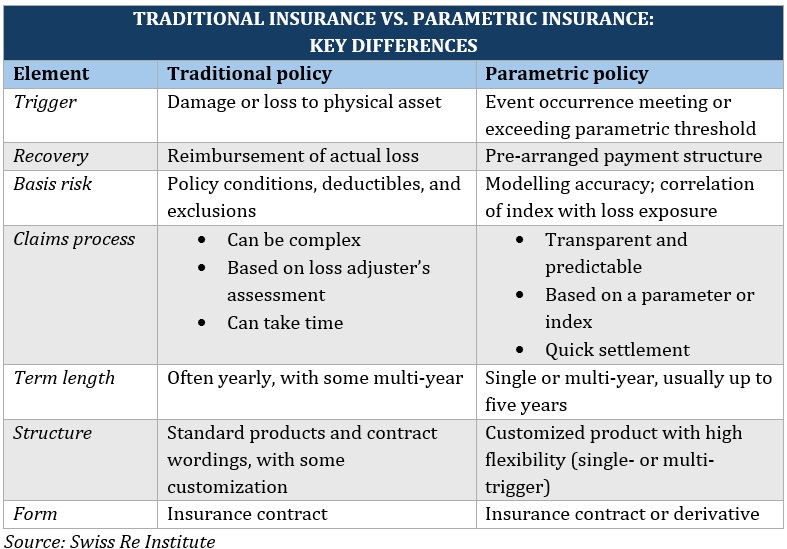
In traditional insurance, the payout is tied to the verified extent of damage. In parametric insurance, the payout is tied to an external index or oracle data. For example, if a protocol’s collateralized asset drops by 20% in a single block, or if a stablecoin de-pegs below $0.95 for more than five minutes, the insurance contract executes immediately. This removes the need for manual loss assessment, which can take weeks or months in conventional markets.
Parametric insurance pays out based on pre-defined triggers (like oracle data) rather than actual loss assessment, enabling near-instant liquidity for DeFi protocols.
This mechanism transforms risk transfer from a reactive administrative process into a proactive, automated safety net. By relying on transparent, on-chain oracles, parametric strategies ensure that capital is deployed exactly when it is needed most, providing immediate liquidity to protocols facing sudden market shocks.
While this model excels in speed and transparency, it introduces basis risk—the potential for a trigger to fire without actual loss, or for a significant loss to occur without triggering a payout. However, for DeFi protocols seeking to offer instant liquidity during volatility, the trade-off is often worth the reduced administrative friction.
Why DeFi needs onchain parametric infrastructure
Traditional insurance relies on a slow, opaque claims process that is fundamentally mismatched for digital assets. When a smart contract is exploited or a protocol suffers a liquidity event, the window for recovery is measured in minutes, not months. By the time a human underwriter assesses the damage and approves a payout, the assets are often gone or the market has already priced in the loss. Onchain parametric insurance removes this bottleneck by replacing subjective loss assessment with objective, pre-defined triggers.
This model, known as index or event-based insurance, pays out automatically when specific data conditions are met. For example, if the price of ETH drops below a certain threshold on a major exchange for more than 15 minutes, a payout is triggered instantly. As noted by the World Economic Forum, parametric insurance bolsters transparency and resilience by linking payouts directly to measurable events rather than post-event damage surveys. This eliminates the friction of claims adjustment and ensures capital is available when it is needed most.
For DeFi, this infrastructure transforms risk transfer from a passive hope into an active, executable strategy. Instead of relying on the goodwill or solvency of a distant insurer, protocols can encode risk parameters directly into their treasury management. The result is a system where risk is priced, transferred, and settled with the same speed and finality as the underlying transaction itself.
Designing effective payout triggers
The technical core of a parametric strategy lies in the payout trigger—the specific condition that moves funds from the smart contract to the policyholder. Unlike traditional insurance, which indemnifies actual loss after an assessment, parametric insurance is index-based. It pays out when an objective, measurable event crosses a predefined threshold, regardless of the insured's actual financial damage.
To minimize basis risk—the gap between the trigger outcome and the user's real-world loss—you must select reliable oracles and define precise trigger logic. This section details how to architect those triggers for DeFi risk transfer.
Selecting reliable oracles
Oracles serve as the bridge between on-chain smart contracts and off-chain data. In parametric insurance, the oracle is the single source of truth; if its data is manipulated or delayed, the payout integrity collapses. For DeFi applications, this often means leveraging decentralized oracle networks like Chainlink, which aggregate data from multiple independent providers to reduce single-point failures.
When designing for catastrophic events, such as named windstorms or earthquakes, the data source must be authoritative. Traditional actuarial tables are insufficient for real-time DeFi execution. Instead, integrate data feeds from recognized meteorological or seismic agencies that offer immutable, timestamped records. The oracle’s role is not to interpret the data but to deliver it accurately and promptly to the contract. Any latency or discrepancy here directly impacts the trustworthiness of the insurance product.
Defining binary and threshold triggers
Triggers generally fall into two categories: binary (event-based) and threshold (continuous variable-based). Binary triggers activate when a specific event occurs or does not occur within a set timeframe. For example, a smart contract might pay out if a hurricane is officially named by the National Hurricane Center within 48 hours of formation. This is simple to verify but can suffer from high basis risk if the event is named but causes minimal damage.
Threshold triggers are more granular. They activate when a continuous variable—such as wind speed, rainfall volume, or earthquake magnitude—exceeds a specific level. For instance, a payout might trigger if wind speeds recorded at a designated station exceed 100 mph for more than one hour. This approach allows for graduated payouts based on severity, aligning the compensation more closely with potential damage levels. When designing these thresholds, use historical data to calibrate the "strike price" of the insurance, ensuring it reflects realistic risk profiles rather than arbitrary numbers.
Minimizing basis risk through data granularity
Basis risk remains the primary challenge in parametric insurance. It arises when the trigger data does not perfectly correlate with the insured’s actual loss. To mitigate this, increase the granularity of your trigger data. Instead of relying on city-wide averages, use hyper-local data points if available. For example, a DeFi protocol insured against server downtime might use a trigger based on the specific uptime of the cloud provider’s API endpoint, rather than a general internet connectivity index.
Also, consider using multiple data sources for the same trigger. If one oracle fails or reports anomalous data, a secondary source can validate the event. This redundancy is critical in high-stakes environments where false positives or negatives can lead to significant financial disputes. By combining robust oracles with carefully calibrated thresholds, you create a payout mechanism that is both automatic and fair, preserving the capital efficiency that makes parametric insurance attractive in the first place.
Parametric vs. indemnity insurance: which fits your DeFi risk?
Choosing between parametric and indemnity insurance comes down to three trade-offs: speed, cost, and basis risk. Parametric insurance pays out based on predefined triggers—like a drop in ETH price or a specific volatility spike—rather than assessing actual losses. This structure removes the need for lengthy claims adjustments, offering near-instant liquidity when markets turn. Indemnity models, by contrast, reimburse verified losses after the fact, providing precise compensation but requiring time-consuming audits.
Speed and liquidity
The primary advantage of parametric coverage is speed. Because payouts are automated and data-driven, liquidity reaches the wallet quickly, which is critical in DeFi where positions can be liquidated in minutes. Traditional indemnity insurance often involves weeks or months of claims processing, delaying capital restoration. For protocols facing immediate solvency risks, parametric triggers provide a faster safety net than manual loss verification.
Cost and complexity
Parametric policies are generally cheaper to administer and underwrite because they eliminate the need for extensive loss assessment teams. However, they introduce basis risk—the possibility that the trigger event does not perfectly match your actual financial loss. For example, if a protocol loses funds due to a smart contract bug but the price trigger wasn’t hit, no payout occurs. Indemnity insurance avoids this mismatch but carries higher premiums and administrative overhead to cover the complexity of verifying each claim.
When to use which
Use parametric insurance for high-frequency, data-driven risks where speed is paramount, such as market crashes or oracle failures. Use indemnity coverage for complex, hard-to-model events like protocol hacks or governance attacks, where actual loss verification is necessary. Many DeFi projects combine both, using parametric triggers for market volatility and indemnity for technical failures.
| Feature | Parametric | Indemnity |
|---|---|---|
| Payout Speed | Minutes to hours | Weeks to months |
| Basis Risk | High (trigger vs. actual loss) | Low (matches verified loss) |
| Cost | Lower (automated) | Higher (manual assessment) |
| Best For | Market volatility, oracle failures | Hacks, governance attacks |
Implementing the strategy in 2026
Integrating parametric insurance into a DeFi portfolio requires moving from theoretical hedging to automated execution. The core challenge in 2026 is not product availability, but the reliability of the data feeds that trigger payouts. A robust strategy treats insurance as a programmable layer, where smart contracts interact directly with oracles to settle claims without human intervention.
1. Audit Oracle Reliability
The foundation of any parametric structure is the data source. If the oracle fails or is manipulated, the insurance is worthless. Before deploying capital, audit the oracle’s history for latency, accuracy, and decentralization. Prefer oracles with multiple data aggregation layers and proven track records in high-volatility environments. Never rely on a single data provider for critical trigger conditions.
2. Define Precise Trigger Thresholds
Clear parameters prevent disputes and ensure immediate liquidity during crises. Define your triggers based on objective, verifiable metrics rather than subjective loss assessments. For example, instead of covering "yield loss," trigger a payout when a protocol’s TVL drops by 20% within a 1-hour window. Align these thresholds with your risk appetite and the specific vulnerabilities of the underlying asset or protocol.
3. Select and Integrate Providers
Choose a parametric insurance provider that supports the specific data sources and smart contract standards you require. Evaluate their liquidity pools, claim settlement speed, and historical performance. Ensure the provider’s smart contracts are audited and compatible with your existing DeFi stack. Integrate the insurance layer seamlessly, so coverage is activated automatically as part of your broader risk management workflow.

Test the oracle’s response time and accuracy under stress conditions. Verify that the data feed cannot be easily manipulated by short-term price spikes or network congestion.

Code the exact conditions for payout in your smart contract. Ensure the logic accounts for edge cases, such as data delays or missing feeds, by setting fallback mechanisms or grace periods.
Launch the parametric insurance contract with a small initial allocation. Monitor the first few potential trigger events closely to ensure the payout mechanism functions as intended before scaling up.
Parametric insurance fills the protection gaps left by traditional indemnity models, offering speed and transparency. By following these steps, you can build a resilient defense against the unique risks of decentralized finance.
No comments yet. Be the first to share your thoughts!