Define the risk parameters
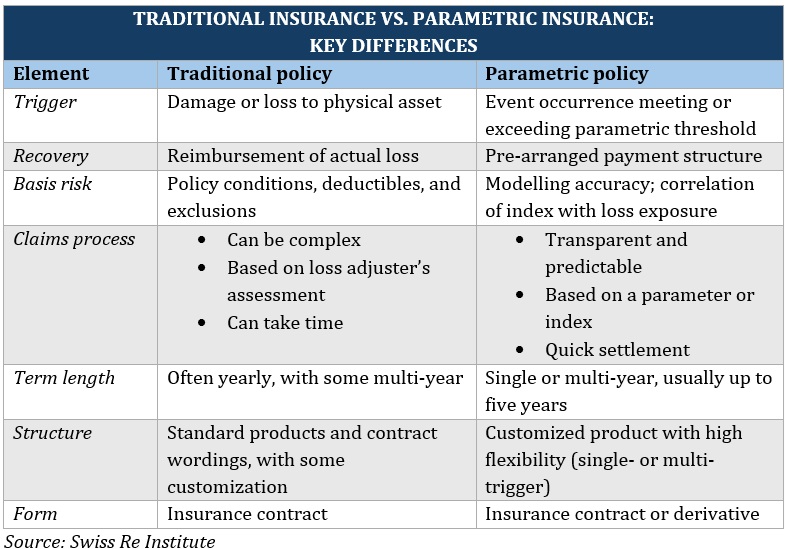
Building a parametric insurance strategy for DeFi requires shifting from traditional indemnity models to event-based triggers. Unlike standard policies that assess actual loss after the fact, parametric insurance pays out based on predefined, measurable conditions. As Swiss Re notes, this model expands coverage to fill gaps left by indemnity insurance, such as deductibles or excluded perils, offering a more flexible approach to risk transfer Swiss Re.
For DeFi protocols, the "event" must be an onchain reality that is verifiable and immutable. Common risks include smart contract failures, oracle manipulation, or liquidity pool drains. The key is defining a trigger that is binary or quantifiable. For example, instead of assessing the financial impact of a hack, the policy might trigger if a specific oracle price deviates by more than 10% within a five-minute window, as reported by an independent data source WEF.
Defining these parameters involves three steps:
- Identify the Risk: Pinpoint the specific vulnerability, such as a flash loan attack or a bridge exploit.
- Select the Data Source: Choose an oracle or onchain metric that reliably measures the event. The source must be trusted and resistant to manipulation.
- Set the Threshold: Determine the exact value that constitutes a claim. This should be based on historical data and stress testing to avoid false positives.

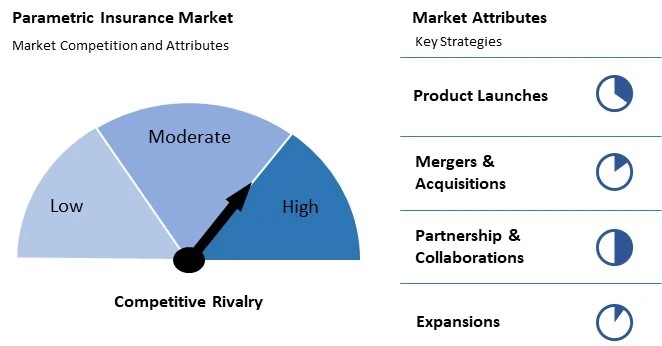
The market for parametric insurance is growing as DeFi seeks more efficient risk management tools. According to Research Nester, the global parametric insurance market is projected to expand significantly through 2035, driven by demand for rapid liquidity and transparency Research Nester. This growth reflects a broader shift toward automated, trust-minimized solutions in decentralized finance.
To understand the economic context of these risks, it is helpful to view the underlying assets. Parametric triggers are often tied to the volatility or stability of the assets being insured. A drop in ETH price or a spike in gas fees can be a proxy for network stress or economic downturns, which may correlate with increased risk of exploits or liquidity crises.
Choosing the data oracle source
In parametric insurance, the oracle is the single point of failure. Unlike traditional indemnity policies where a adjuster inspects physical damage, a smart contract pays out automatically when an external data feed confirms a specific event threshold has been breached. If the oracle is compromised, the insurance is worthless. For DeFi protocols, this means selecting a data source that is decentralized, tamper-resistant, and resistant to manipulation.
The primary risk in DeFi is oracle manipulation, where bad actors exploit low liquidity on centralized exchanges to spoof prices. A robust strategy requires aggregating data from multiple independent sources to prevent a single point of failure. This is not just a technical preference; it is a regulatory expectation. The National Association of Insurance Commissioners (NAIC) emphasizes that parametric triggers must rely on "independent third party institutions" to ensure impartiality and accuracy in claims settlement [src-serp-5].
To illustrate the volatility that makes reliable oracles essential, consider the price action of major crypto assets. Sudden, sharp spikes can trigger false positives if the oracle relies on a single, thin liquidity pool.
When comparing oracle solutions, look beyond just data frequency. You must evaluate the consensus mechanism, the number of independent nodes, and the historical track record of the provider. The following table breaks down the key differences between common oracle architectures in the context of insurance reliability.
| Oracle Type | Manipulation Resistance | Best For |
|---|---|---|
| Single-source exchange | Low | High-frequency trading only |
| Decentralized network (e.g., Chainlink) | High | Parametric insurance payouts |
| Hybrid (On-chain + Off-chain) | Very High | Complex multi-parameter triggers |
Structure the smart contract logic
Translating a parametric insurance policy into code requires precision. The smart contract serves as the automated underwriter, executing payouts based on predefined data triggers rather than subjective loss assessments. This structure eliminates manual claims processing, reducing settlement times from months to minutes. For DeFi risk transfer, this automation is critical for maintaining liquidity during market volatility.
The implementation follows a strict sequence to ensure transparency and security. Each step must be coded to prevent manipulation and guarantee that payouts occur only when external data confirms the event.
Start by integrating a reliable oracle, such as Chainlink, to fetch external data. The contract must specify exactly which data points are relevant, such as the price of ETH or the volatility index of a specific DeFi protocol. Avoiding proprietary or single-source data feeds is essential to prevent oracle manipulation, a common attack vector in DeFi. The oracle acts as the bridge between off-chain reality and on-chain execution.
Embed the trigger thresholds directly into the contract logic. For example, if the protocol’s total value locked (TVL) drops by 20% within a 15-minute window, the condition is met. These conditions must be deterministic and binary. Ambiguity in the code can lead to failed payouts or unintended contract states, so the logic must be audited rigorously against edge cases like flash crashes or data delays.
Once the oracle confirms the trigger, the contract automatically releases funds to the policyholder’s wallet. The payout amount is calculated based on a pre-agreed formula, such as a linear scale relative to the severity of the event. This step requires no human intervention, ensuring that capital is available immediately to cover losses or rebalance positions. The contract must also handle edge cases where the oracle fails to report, typically by pausing execution rather than paying out incorrectly.
| Feature | Traditional Insurance | Parametric DeFi |
|---|---|---|
| Trigger | Loss assessment report | Oracle data feed |
| Payout Time | Weeks to months | Minutes to hours |
| Dispute Risk | High | Low (deterministic) |
The reliability of this system depends entirely on the integrity of the data feed. If the oracle provides inaccurate data, the contract will execute based on false premises. Therefore, using decentralized oracle networks with multiple data sources and consensus mechanisms is standard practice. This approach aligns with recommendations from industry bodies like the World Economic Forum, which emphasize the need for robust data infrastructure in digital risk transfer.
Fund the pool with DeFi liquidity
Funding a parametric insurance pool requires balancing two competing needs: ensuring enough capital is available for immediate payouts when triggers fire, while generating yield to keep the pool solvent over time. Unlike traditional insurance, which relies on static reserves and actuarial tables, DeFi liquidity pools use dynamic capital. This approach allows for faster payouts but introduces new risks, such as oracle manipulation or impermanent loss, that must be managed carefully.
The core mechanism involves depositing capital into a liquidity pool, often paired with a stablecoin or a volatile asset depending on the risk profile. Liquidity providers (LPs) earn fees from the pool’s activity, which can be used to subsidize payouts or cover operational costs. However, this model is not without its pitfalls. If the underlying assets are too volatile, the pool may face insolvency during high-volatility events—precisely when payouts are most needed. To mitigate this, many protocols use stablecoin pairs or rebalancing mechanisms to maintain stability.
| Feature | Traditional Insurance Funding | DeFi Liquidity Pool Funding |
|---|---|---|
| Capital Source | Premiums, reinsurance, reserves | LP deposits, token emissions |
| Payout Speed | Days to weeks | Minutes to hours |
| Yield Generation | Low (bond yields) | High (trading fees, incentives) |
| Risk Exposure | Actuarial, credit risk | Oracle, smart contract, IL risk |
| Transparency | Opaque (internal audits) | On-chain (public ledger) |
To illustrate the capital dynamics, consider the performance of a hypothetical DeFi insurance pool. While specific token prices fluctuate, the underlying trend of liquidity provision in DeFi insurance protocols has shown resilience. The chart below reflects the general market behavior of DeFi insurance tokens, which often correlate with broader crypto market trends but can decouple during specific risk events.
Note: The chart above represents a generic DeFi insurance token for illustrative purposes. Actual pool performance depends on the specific assets and protocols used.
When integrating with DeFi liquidity pools, it is crucial to select assets that align with the risk profile of the parametric triggers. For example, if the insurance covers weather-related events, the pool might be funded with stablecoins to avoid volatility-driven insolvency. Conversely, if the coverage is for crypto-specific risks, such as oracle failures, the pool might include volatile assets to capture higher yields. The key is to match the liquidity source with the nature of the risk being transferred.
| Feature | Traditional | DeFi Pool |
|---|---|---|
| Payout Speed | Days-Weeks | Minutes-Hours |
| Yield Potential | Low | High |
| Transparency | Opaque | On-Chain |
| Primary Risk | Actuarial | Oracle/Smart Contract |
The table above highlights the trade-offs between traditional and DeFi funding models. While DeFi offers speed and transparency, it requires robust risk management to handle the unique challenges of on-chain liquidity. As the DeFi insurance space matures, we can expect to see more sophisticated funding mechanisms that combine the best of both worlds, offering the speed of DeFi with the stability of traditional insurance.

Test triggers and edge cases
Parametric insurance is only as reliable as the mechanism that decides when to pay. In DeFi, this means your smart contracts must withstand rigorous stress testing before they go live. The goal is to eliminate false positives—where a payout occurs despite no actual loss—and negative basis risk, where a real disaster fails to trigger the contract. As Swiss Re notes, these products are designed to fill protection gaps left by traditional indemnity insurance, but that promise collapses if the trigger logic is flawed.
The most significant threat to DeFi parametric models is oracle manipulation. If a price feed or data source is spoofed, an attacker can trigger a payout or prevent a legitimate one. You must test how your contract handles anomalous data spikes, delayed updates, and sudden oracle failures. This isn't just about code efficiency; it's about financial integrity. A single edge case can drain a liquidity pool or leave policyholders exposed.
To visualize the volatility these systems manage, consider the price action of major crypto assets, which often serve as underlying data points for DeFi insurance products.
The NAIC highlights that parametric insurance offers faster payouts by relying on pre-defined event parameters rather than complex loss assessments. This speed is a feature, not a bug, but it requires precise calibration. If your trigger is too sensitive, you face basis risk; if it's too loose, you face moral hazard. Testing must cover both scenarios to ensure the contract behaves exactly as intended under stress.
Before launching, use the following checklist to validate your trigger logic and data sources:
By treating trigger testing as a core component of your risk transfer strategy, you build trust with users and reduce the likelihood of catastrophic failures. In a high-stakes environment, precision is the only metric that matters.
Frequently asked questions about parametric insurance
Parametric insurance is a policy where the payout is determined by the intensity of an event and a pre-agreed loss amount, rather than traditional indemnification. Also known as event or index-based insurance, it triggers payments when specific conditions—such as wind speed, rainfall, or oracle data feeds in DeFi—are met. This structure eliminates lengthy claims assessments, offering rapid liquidity for risk transfer.
How does parametric reinsurance work?
Reinsurance in this model relies on predetermined triggers and payout schemes established by independent third-party institutions. These triggers facilitate swift settlements because the event's occurrence is objective and verifiable. For DeFi protocols, this means reinsurance layers can automatically cover smart contract failures or oracle manipulation events without human intervention, reducing counterparty risk.
What is a real-world example of a parametric policy?
Consider a wind energy producer facing a 30% drop in production due to changing wind conditions. If the wind speed drops below a pre-defined threshold, the parametric payout is triggered automatically. In DeFi, a similar mechanism might release stablecoin liquidity if a specific lending protocol’s collateralization ratio falls below a safety threshold, protecting users from cascading liquidations.
Why use parametric models in DeFi?
Traditional insurance struggles with the speed and complexity of blockchain risks. Parametric models provide transparency and speed by linking payouts directly to on-chain data. This approach bolsters resilience by ensuring that funds are available immediately when a risk event occurs, rather than waiting for an adjuster to verify the loss.
No comments yet. Be the first to share your thoughts!