Why parametric insurance strategy fits DeFi
Traditional indemnity insurance relies on proving actual loss, a process that requires adjusters, legal review, and months of paperwork. In Decentralized Finance (DeFi), where smart contracts execute transactions in seconds and exploits can drain pools in minutes, this latency is fatal. A parametric insurance strategy solves this by replacing subjective damage assessment with objective, data-driven triggers. Instead of arguing over how much was stolen, the protocol pays out automatically when a predefined condition is met.
This shift from "proof of loss" to "proof of event" eliminates the primary friction point in DeFi risk transfer: the dispute. When the trigger is based on immutable on-chain data—such as a specific token balance dropping below a threshold or a known oracle price deviating by a set percentage—there is no room for interpretation. The payout is pre-agreed, automated, and instantaneous. As Aon notes, parametric insurance is a "simple, straightforward and fast-paying risk transfer solution" because it removes the administrative burden of claims processing entirely.
The result is a model that aligns with the native speed of blockchain networks. For a parametric insurance strategy to work in DeFi, the trigger must be verifiable without human intervention. This ensures that liquidity providers and users receive protection exactly when they need it, rather than months later after a lengthy adjudication process. By removing the middleman from the claims process, parametric insurance offers the transparency and resilience that traditional models cannot provide in a high-stakes, high-velocity environment.
Designing onchain triggers
Building a robust parametric insurance strategy starts with the data layer. In traditional insurance, assessing a claim takes time and often involves disputes over cause and extent. Onchain, we remove the ambiguity by tying payouts directly to objective, measurable events. If the weather data says it rained, the code pays out. There is no adjuster, no paperwork, and no negotiation. This speed is the entire value proposition of onchain risk transfer.
The first step is selecting a reliable oracle. You cannot build a trustless system on subjective data. You need sources that are resistant to manipulation and have a proven track record of accuracy. For weather-based triggers, this might mean pulling data from established meteorological agencies or specialized climate data providers. For crypto-specific risks, it means using price feeds from decentralized oracle networks like Chainlink. The oracle acts as the bridge between the real world and the blockchain. If the bridge is shaky, the policy is broken. We prioritize sources that publish data on-chain or have multiple verification layers to prevent a single point of failure.
| Data Source | Application | Trust Model |
|---|---|---|
| Chainlink | Price/Market Data | Decentralized Oracle Network |
| AccuWeather | Weather/Climate | Centralized Official Agency |
| NOAA | Catastrophe Events | Government Public Record |
Once the source is chosen, you must define the trigger conditions with surgical precision. Vague language is the enemy of parametric insurance. A trigger like "significant damage" is useless onchain. Instead, you define exact thresholds: "If wind speed exceeds 100 mph for 10 minutes, or if the S&P 500 drops 10% in a single day." These conditions are encoded into smart contracts, ensuring that the payout logic is immutable and transparent.
This approach shifts the focus from if a loss occurred to how much the event deviated from normal. The payout is pre-agreed based on the severity of the trigger. This clarity allows for instant liquidity during crises, which is critical for DeFi protocols and real-world assets alike. By anchoring your parametric insurance strategy in hard data and clear rules, you create a system that is both resilient and efficient.

Comparing infrastructure providers
Building a parametric insurance strategy for DeFi risk transfer requires matching your specific risk profile to the right onchain infrastructure. Unlike traditional indemnity models, these protocols rely on pre-defined triggers—such as price drops or volatility spikes—to execute payouts automatically. The choice of provider determines your coverage precision, oracle reliability, and liquidity depth.
The table below compares key DeFi parametric insurance protocols. It highlights their primary coverage types, the oracles used to verify triggers, and their relative liquidity positions. Selecting the right stack depends on whether you prioritize speed, transparency, or capital efficiency.
| Protocol | Coverage Type | Oracle Source | Liquidity Depth |
|---|---|---|---|
| Nexus Mutual | Smart contract failure | On-chain & off-chain | High |
| Etherisc | Weather & flight delay | Chainlink | Medium |
| InsurAce | Multi-chain DeFi risks | Chainlink | High |
| Unslashed | Smart contract exploit | On-chain events | Medium |
| Bridge Mutual | Stablecoin depegging | On-chain price feeds | Low |
Liquidity depth is critical for parametric insurance strategy execution. While high-liquidity pools like those in Nexus Mutual or InsurAce can absorb larger claims without slippage, smaller protocols may face liquidity constraints during high-volatility events. Oracle choice also matters: Chainlink oracles offer robust price feeds for financial triggers, while on-chain event listeners are better suited for protocol-specific exploits.
Pricing your parametric insurance strategy
Pricing a parametric policy is less about estimating actual losses and more about quantifying the probability of a trigger event. In a traditional insurance model, you pay premiums to cover the expected value of damages. In a parametric parametric insurance strategy, you are paying for the certainty of a payout when a specific market condition is breached. This shifts the risk from the insurer to the market itself, meaning your premium must reflect the statistical likelihood of that breach occurring.
To build a robust pricing model, you need to look at historical volatility. If you are insuring against a sharp drop in a major DeFi asset like Ethereum, you cannot rely on simple averages. You need to analyze the tails of the distribution—the extreme events that happen rarely but hit hard. The premium should scale with the volatility index. When the market is calm, premiums are lower because the trigger is less likely to be crossed. When volatility spikes, the cost of coverage rises to reflect the increased probability of a payout.
Current market conditions also play a critical role in determining the cost of capital. If the broader DeFi ecosystem is experiencing high leverage or low liquidity, the risk of a cascading liquidation event increases. Your pricing model should incorporate these macro factors. A static premium based on last year’s data might leave you underinsured during a bull market crash. Instead, dynamic pricing mechanisms that adjust based on real-time volatility indices ensure that the cost of protection remains aligned with the actual risk exposure.
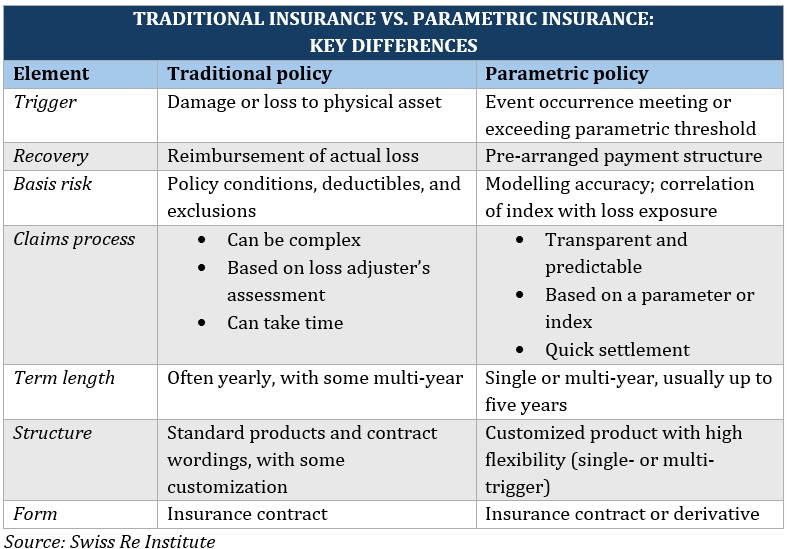
The goal is to find the sweet spot where the premium is affordable enough to justify the coverage, but high enough to ensure the policy remains solvent. This requires a deep understanding of both the underlying asset’s behavior and the specific trigger mechanism you have chosen. By grounding your parametric insurance strategy in hard data rather than guesswork, you create a transparent and reliable safety net that can actually respond when the market moves.
Common parametric strategy mistakes
Building a robust parametric insurance strategy requires more than just setting a trigger; it demands rigorous stress-testing of the underlying mechanics. Even the most elegant smart contract can fail if the foundational data or structural assumptions are flawed. When constructing your DeFi risk transfer layer, you must guard against three specific pitfalls that frequently erode coverage value.
Basis risk and trigger mismatch
Basis risk remains the most persistent threat in parametric design. This occurs when the chosen trigger—such as a specific price index or weather station reading—does not perfectly correlate with your actual loss or exposure. A strategy might pay out when the market moves, but if your specific portfolio hedge is lagging, the coverage fails to protect the intended asset. The World Economic Forum notes that while parametric insurance bolsters resilience, its effectiveness hinges on the precision of these pre-defined triggers. If the correlation is weak, you are left with a policy that pays when you don't need it, or worse, fails to pay when you do. Always backtest your trigger against historical loss events specific to your portfolio, not just broad market indices.
Oracle manipulation and data integrity
In DeFi, oracles are the single point of failure for many parametric strategies. If your trigger relies on a decentralized oracle feed, you must account for potential manipulation during periods of extreme volatility or low liquidity. Attackers can sometimes influence price feeds to trigger false payouts or prevent legitimate claims. Ensure your strategy uses robust oracle solutions that aggregate data from multiple independent sources and implement time-weighted average price (TWAP) mechanisms to smooth out short-term spikes. The integrity of your strategy is only as strong as the data feeding it.
Over-leveraging coverage
It is tempting to buy maximum coverage to feel secure, but over-leveraging your parametric position can drain your capital efficiency. If the cost of the premium or the collateral required to mint the coverage token is too high relative to your expected loss probability, the strategy becomes a net negative over time. Treat your parametric insurance as a hedge, not a primary yield source. Size your positions so that the cost of coverage never threatens the viability of your core operation. Balance the breadth of your coverage with the sustainability of your treasury.

Market context
Understanding the broader market environment is essential for timing your coverage purchases. Volatility often increases the cost of parametric insurance, making it a good time to secure long-term hedges during stable periods.
Frequently asked questions about parametric insurance
What is the concept of parametric insurance?
Parametric insurance is a risk transfer solution that pays out based on a specific, pre-defined trigger rather than an assessment of actual losses. As noted by Aon, it is a straightforward mechanism where the payout is triggered by events like wind speed or rainfall levels, offering rapid and flexible financial resilience without lengthy claims processing.
What does parametric mean in insurance?
In this context, "parametric" refers to the use of objective parameters to calculate payouts. According to Mapfre, the insurance company pays the customer based on the intensity of the event and the amount of loss calculated through a model using previously supplied data, ensuring transparency and speed.
What is an example of a parametric insurance policy?
A common example involves wind energy producers. If the temperature or wind speed drops below a pre-defined threshold, it triggers a claim, and the indemnity is paid out upfront. This allows producers to manage the significant production variances caused by changing weather conditions without waiting for loss verification.
How does this strategy help in DeFi?
By automating payouts through smart contracts, parametric insurance strategies in DeFi remove counterparty risk and delay. This aligns with the World Economic Forum's observation that such models bolster transparency, allowing communities and protocols to rebuild or rebalance quickly after a shock.
No comments yet. Be the first to share your thoughts!