What parametric insurance means for DeFi
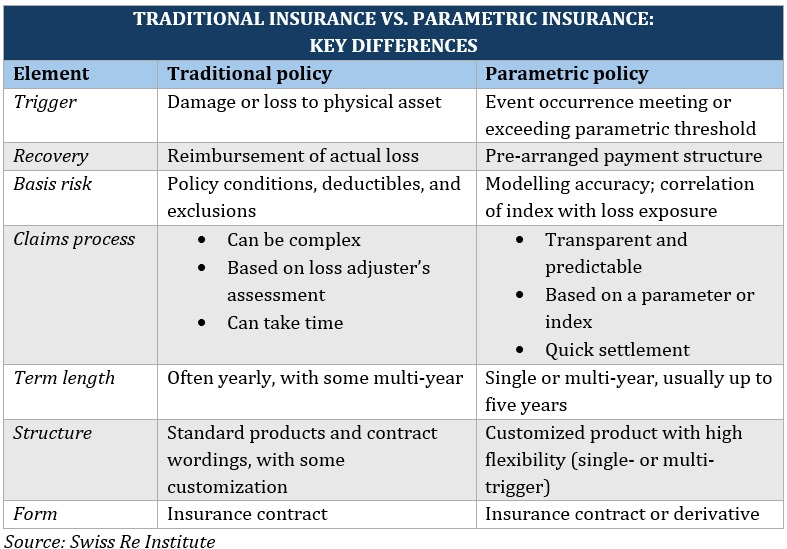
Traditional insurance operates on indemnity. You file a claim, an adjuster investigates the damage, and the insurer pays out based on the proven loss. It is a reactive process that prioritizes accuracy over speed. Parametric insurance flips this model. Instead of proving loss, it pays out when a specific, pre-defined trigger is met. As Aon describes it, this is a "simple, straightforward and fast-paying risk transfer solution" that removes the ambiguity of claims assessment.
In the context of DeFi, this distinction is not just convenient; it is structural. Onchain infrastructure is built for automated, deterministic execution. Smart contracts do not need to wait for human adjusters to verify a hack or a price crash. They can read data feeds and execute payouts instantly. This alignment makes parametric insurance the natural fit for DeFi risk transfer, allowing protocols to cover gaps that indemnity models struggle with, such as deductibles or excluded perils, as noted in Swiss Re’s comprehensive guide.
For a parametric insurance strategy, the focus shifts from recovering actual damages to managing liquidity against specific events. If an oracle reports a price drop below a set threshold, the system releases funds automatically. This removes the lag between risk materialization and financial support, providing immediate capital preservation when it matters most.
This automation reduces counterparty risk and administrative overhead. By defining parameters clearly in code, DeFi protocols can offer transparent, trustless coverage that responds in real-time to market conditions, rather than waiting for the slow machinery of traditional claims processing.
Core components of a parametric strategy
Building a parametric insurance strategy for DeFi risk transfer requires assembling three distinct parts that work in sequence: the oracle data that measures the event, the collateral that covers the risk, and the execution code that handles the payout. Unlike traditional insurance, which spends months assessing actual losses, this model relies on pre-agreed parameters. As the National Association of Insurance Commissioners (NAIC) notes, parametric insurance pays set amounts based on event parameters rather than actual losses, enabling faster payouts after disasters.
The Trigger Mechanism
The heart of any parametric strategy is the trigger. In DeFi, this is almost always an oracle—a data feed that brings off-chain reality onto the blockchain. The oracle monitors a specific metric, such as ETH price, volatility, or a weather index, and reports the result to the contract. If the metric crosses a pre-defined threshold, the payout logic activates automatically. There is no claims adjuster and no dispute over the severity of damage; if the data says the event happened, the insurance pays. This transparency is a key selling point, as highlighted by the World Economic Forum, which notes that parametric insurance bolsters transparency by offering rapid, flexible payouts based on these pre-defined triggers.
The Coverage Asset
To pay out when triggers are hit, the strategy needs a pool of capital. In DeFi, this is typically stablecoins (like USDC or DAI) or liquid collateral assets like ETH. These assets are locked in the smart contract as the insurance fund. The choice of asset matters: stablecoins provide predictable payout values, while volatile assets like ETH can offer higher yield potential for the provider but introduce complexity in payout valuation. The coverage asset must be sufficient to handle the maximum potential loss defined in the code without running out of liquidity during a high-volatility event.
The Execution Code
The smart contract is the rulebook that ties the trigger and the collateral together. It defines the payout function—how much is paid for every unit the trigger exceeds the threshold. For example, if the trigger is a 10% drop in ETH price, the contract might calculate a payout proportional to the depth of that drop. The contract also handles the distribution of funds to policyholders and the eventual return of any unused collateral to the providers. This code must be audited rigorously, as a bug in the logic could lead to incorrect payouts or frozen funds.

Visualizing the Trigger
To understand how these triggers work in practice, it helps to look at historical market data. A parametric strategy might use a volatility trigger based on ETH price movements. The chart below shows ETH price history, illustrating the kind of sharp drops or spikes that would activate a typical DeFi insurance trigger. When the price crosses the pre-set line, the oracle reports it, and the system executes the payout.
How Onchain Infrastructure Powers Parametric Insurance
Building a parametric insurance strategy for DeFi risk transfer relies on modular infrastructure that removes intermediaries from the equation. In traditional insurance, a claims adjuster investigates damage, verifies loss, and approves payout—a process that can take weeks or months. On-chain, this entire workflow is replaced by code that executes instantly when data confirms a specific condition has been met.
The engine behind this automation is typically a combination of smart contracts and decentralized data feeds. Protocols like Nexus Mutual or Opyn structure policies as smart contracts where the terms are immutable and visible to everyone. However, the contract itself cannot "see" the real world. It needs a reliable oracle to tell it whether a trigger event has occurred. This is where Chainlink Functions or similar oracle networks come in. They fetch external data—such as weather reports, flight delays, or market volatility indices—and feed it securely into the blockchain.
Consider a DeFi protocol offering protection against a flash crash. The parametric policy might define a trigger: if the price of ETH drops by 20% in under one minute, payouts are due. A Chainlink oracle monitors the price feed in real time. Once the drop hits the threshold, the oracle sends a signed message to the smart contract. The contract verifies the signature, checks the trigger condition, and automatically distributes stablecoins to all policyholders. There is no application form, no waiting period, and no manual intervention.
This infrastructure shift changes the nature of risk transfer. Because the payout logic is transparent and automated, the focus moves from claims adjudication to trigger design. The accuracy of the data source becomes the most critical component of the strategy. If the oracle data is delayed or manipulated, the insurance fails. Therefore, choosing robust oracle networks and well-audited smart contract frameworks is essential for any parametric insurance strategy aiming for reliability in the DeFi ecosystem.
Managing Basis Risk in Parametric Models
Basis risk is the fundamental flaw in parametric insurance. It occurs when the trigger event fires, but the policyholder suffers no actual financial loss, or conversely, when a loss occurs but the trigger remains silent. This gap between the index and the real-world impact can erode trust and make coverage feel less like insurance and more like a speculative bet.
The core issue lies in spatial and temporal misalignment. For example, a rainfall trigger for a specific weather station might record 100mm of rain, triggering a payout for a farmer in a neighboring valley that received only 20mm. The farmer gets paid for a disaster that didn't happen to them. This disconnect is what PwC identifies as the primary challenge in designing robust parametric structures.
To mitigate this, you must carefully select triggers that correlate tightly with actual loss functions. Using multiple data sources, such as combining satellite imagery with ground-level sensors, can reduce the likelihood of false positives. Additionally, incorporating a deductible or a "trigger intensity" threshold ensures that only significant deviations from the norm result in payouts, filtering out minor noise that doesn't impact financial stability.
Ultimately, managing basis risk is about balancing speed with accuracy. While parametric insurance offers rapid liquidity, it requires rigorous back-testing of historical data to ensure the chosen parameters reliably predict loss. Without this validation, the strategy may protect the protocol's treasury while leaving individual users exposed to the very risks they sought to transfer.
Step-by-step: Launching a parametric policy
Setting up a parametric insurance strategy in DeFi is less about filling out paperwork and more about configuring code. Unlike traditional indemnity policies that require claims adjusters to assess damage, your payout is automatic once a specific condition is met. This workflow walks you through deploying that logic on-chain.
Start by defining exactly what you are protecting against. In DeFi, this usually means smart contract vulnerability, oracle manipulation, or extreme volatility in a specific asset pair. Be precise: instead of "market crash," define "ETH drops below $1,500 in 1 hour." The clearer the risk definition, the more reliable the hedge.
Your policy lives or dies by its data source. Choose an oracle (like Chainlink) that can reliably report the parameter you defined. Ensure the oracle has sufficient decentralization and historical uptime to prevent manipulation. This is the "truth" your smart contract will trust, so treat it like a bank vault.

Configure the smart contract’s logic. Set the exact trigger value (e.g., price, volume, or time) and the corresponding payout amount. You can structure this as a fixed lump sum or a sliding scale based on severity. This step translates your risk definition into executable code that requires no human intervention.

Parametric insurance contracts often require upfront capital to cover potential payouts. Deposit the necessary assets (usually stablecoins or the underlying asset) into the contract’s reserve. This ensures that if your trigger fires, the payout is immediately available without relying on external underwriters.
Once live, your job shifts to monitoring. While the payout is automatic, you should track the oracle’s health and the contract’s solvency. Most DeFi dashboards allow you to view the current status of your hedge in real-time, ensuring your strategy remains aligned with your risk profile.
Frequently asked questions about parametric insurance strategy
How does a parametric insurance strategy work in DeFi?
A parametric insurance strategy in DeFi uses smart contracts to automate payouts based on objective data triggers rather than traditional claims assessments. For example, if a protocol defines a trigger where ETH price drops below $1,500, an oracle detects this event and the smart contract automatically releases stablecoins to policyholders. This eliminates the need for adjusters and speeds up capital deployment significantly.
What is basis risk in parametric insurance?
Basis risk is the potential mismatch between the trigger event and the actual financial loss suffered by the user. For instance, a rainfall trigger might pay out because a specific weather station recorded heavy rain, even if a farmer in a nearby valley received no rain and suffered no crop damage. This gap can make coverage feel like a speculative bet rather than true insurance, requiring careful trigger design to minimize.
Why is oracle selection critical for parametric strategies?
Oracles provide the data that activates payouts, making them the single point of failure in parametric models. If an oracle is delayed, manipulated, or goes offline, the insurance contract cannot execute correctly. Therefore, selecting decentralized and robust oracle networks, such as Chainlink, is essential to ensure the integrity of the trigger mechanism and the reliability of the insurance strategy.
What are the advantages of parametric insurance over indemnity models?
Parametric insurance offers faster payouts, lower administrative costs, and greater transparency compared to indemnity models. Because payouts are triggered by data rather than loss verification, there is no lengthy claims process. This speed is particularly valuable in DeFi, where liquidity crises can escalate quickly, and immediate capital access is often necessary to prevent protocol collapse.
No comments yet. Be the first to share your thoughts!