The parametric insurance limits to account for
Parametric insurance is often sold as the perfect hedge against unpredictable events, but it comes with a strict structural constraint: the trigger must be binary. Unlike traditional indemnity insurance, which pays out based on the actual financial loss suffered, parametric contracts pay out based on a predefined threshold being met. This means the index—whether it is rainfall data, earthquake magnitude, or a price drop—must be measurable, verifiable, and independent of the policyholder’s actual situation.
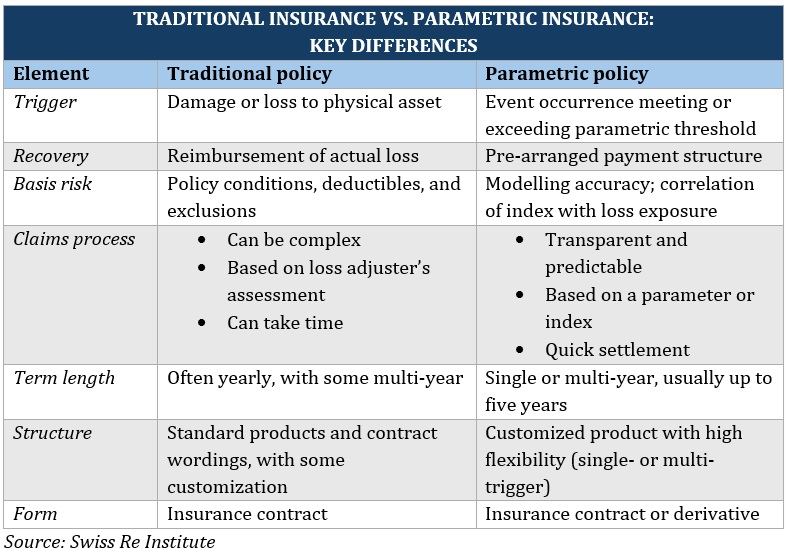
This constraint creates a fundamental gap between the index and the real-world impact. A parametric policy might pay out because wind speeds exceeded 100 mph, even if the insured building sustained no damage. Conversely, it might pay nothing if a flood occurred but failed to reach the specific gauge threshold, despite causing significant property damage. This is known as basis risk, and it is the primary trade-off for the speed and transparency of the product.
For DeFi risk transfer, this constraint is both a feature and a liability. Smart contracts execute payouts instantly when on-chain data oracles confirm the threshold, eliminating the months-long claims process of traditional insurance. However, this efficiency relies entirely on the integrity of the data source. If the oracle is manipulated or the data feed is delayed, the contract may execute incorrectly, leaving the user with either an unearned payout or an uninsurable loss. Understanding this limitation is essential before allocating capital to these instruments.
Parametric insurance choices that change the plan
Onchain parametric insurance offers speed and transparency, but it introduces specific structural risks that differ from traditional indemnity models. Before deploying capital or structuring coverage, you must evaluate how the payout mechanism interacts with your actual loss profile. The core tension lies between execution efficiency and basis risk.
Basis risk exposure
Basis risk occurs when the index triggers a payout that does not match your actual financial loss. In traditional insurance, an adjuster verifies your damage. In parametric models, the smart contract pays based on an external data point, such as wind speed or a crypto price drop, regardless of your individual exposure. If your asset was protected by a hedge that isn't reflected in the index, you might receive a payout for a loss you didn't suffer, or worse, miss a payout for a severe loss that the index failed to capture. This mismatch is the primary reason parametric products often leave gaps in comprehensive risk management.
Liquidity and counterparty limits to account for
While smart contracts automate claims, the liquidity of the payout depends on the backing reserves or the stability of the underlying collateral. If the insurance protocol relies on volatile crypto assets for its reserve pool, a market crash could impair its ability to pay out when it is needed most. Unlike traditional insurers that hold regulated capital, onchain protocols may face slippage or insolvency during high-volatility events. You must verify the reserve composition and whether the protocol has sufficient liquidity to handle simultaneous large-scale claims without degrading the value of the payout.
Data oracle reliability
The entire contract hinges on the accuracy of the data oracle feeding the index. If the oracle is manipulated, delayed, or fails to report, the contract may pay out incorrectly or not at all. Onchain oracles are generally robust but are not immune to feed errors or governance attacks. For physical events like earthquakes, the reliance on third-party scientific data adds a layer of offchain trust. You should assess the oracle's track record and the fallback mechanisms in place if the primary data source becomes unavailable during a crisis.
Cost and premium volatility
Parametric premiums are often priced dynamically based on real-time risk metrics, which can lead to significant price swings. During periods of high market volatility or frequent triggering events, premiums can spike, making coverage expensive or unavailable. Conversely, in calm periods, premiums may be artificially low, potentially masking underlying systemic risks. This volatility requires careful cash flow planning, as the cost of protection is not static like traditional annual policies.
| Tradeoff Factor | Advantage | Primary Risk |
|---|---|---|
| Basis Risk | Fast, automated payouts | Payout may not match actual loss |
| Liquidity | Transparent reserve tracking | Collateral volatility during crises |
| Oracle Dependence | No human adjuster bias | Feed errors or manipulation |
| Premium Pricing | Real-time risk alignment | Price spikes during high volatility |
How to evaluate parametric insurance options
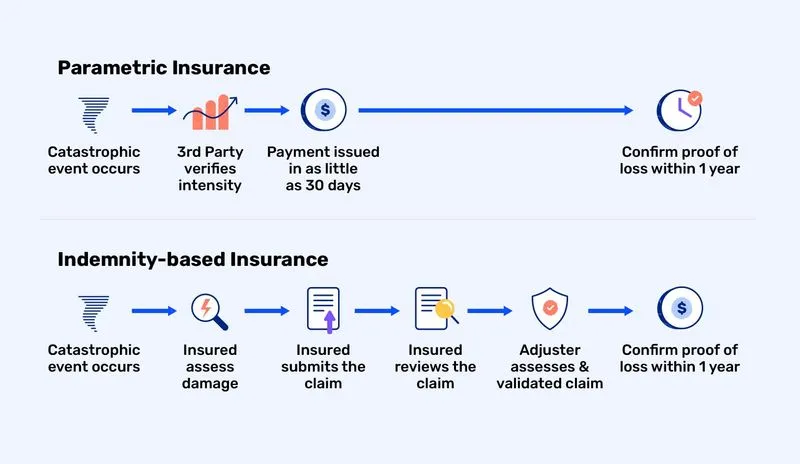
Parametric insurance fills the gaps that traditional indemnity coverage leaves behind. Unlike standard policies that pay out based on actual loss assessment, parametric triggers pay when a specific threshold is met, such as wind speed or rainfall levels. This removes the wait for adjusters and reduces administrative friction, but it requires precise structuring.
When evaluating on-chain parametric products, treat the smart contract as the underwriter. You are not buying a promise to compensate for damage; you are buying a financial instrument that settles automatically. Evaluate the underlying data source, the trigger logic, and the liquidity of the settlement pool. These three elements determine whether the policy protects you or exposes you to basis risk.
The oracle feeding data to the smart contract is the single point of failure. If the data source is manipulated or delayed, the payout fails. Prioritize protocols that use decentralized oracles with multiple independent data feeds. Check if the oracle has a track record of handling extreme weather events or market shocks without stalling.
A trigger must match your real-world risk, not just a convenient metric. If you are insuring a supply chain against port closures, a rainfall trigger in a nearby city may not correlate with your actual losses. Stress-test the correlation between the trigger event and your potential financial impact to avoid basis risk, where the trigger fires but you suffer no loss, or vice versa.
The value of parametric insurance is immediate liquidity. Check the protocol’s reserve size and historical settlement times. A smart contract that takes days to process a payout due to low liquidity or governance delays defeats the purpose. Look for on-chain liquidity pools with sufficient depth to absorb large claims without slippage.
Watchouts for Weak Parametric Options
Not every onchain parametric product offers real protection. Several projects rely on oversimplified triggers that fail when market conditions shift or when liquidity dries up at the moment of claim. You need to separate marketing claims from actual structural integrity.
Oracle Manipulation Risks
Parametric payouts depend entirely on data feeds. If an oracle is vulnerable to flash loan attacks or latency issues, the trigger can fire incorrectly. This is not theoretical; several DeFi protocols have suffered exploits due to stale or manipulated price data. Always check which oracle provider is used and whether there are circuit breakers for anomalous data spikes.
Liquidity Mismatch
A smart contract may promise a payout, but if the liquidity pool is thin, the payout fails or slippage destroys the value. This is common in niche parametric pools. Verify the depth of the liquidity pool and the protocol’s reserve management strategy before assuming coverage is reliable.
Vague Trigger Definitions
Some products use ambiguous trigger conditions, such as "market crash" without defining the threshold or timeframe. This invites disputes and invalidates the "trustless" promise. Look for precise, measurable parameters like specific price drops over defined intervals.
Parametric insurance: what to check next
Parametric insurance pays out when a specific trigger is met, such as wind speed or earthquake magnitude, rather than after an assessment of actual losses. This structure removes the long adjuster wait times typical of traditional policies, making it a vital tool for rapid liquidity in DeFi and emergency response.
How does parametric insurance differ from traditional coverage?
Traditional indemnity insurance requires a claims adjuster to verify the extent of physical damage before paying. Parametric policies bypass this step entirely. Payouts are automatic and instantaneous once the predefined parameter is breached, regardless of whether the insured asset was actually damaged. This efficiency fills protection gaps left by standard deductibles and excluded perils [src-serp-1].
What is basis risk in parametric contracts?
Basis risk occurs when the trigger event does not perfectly align with your actual financial loss. For example, if a hurricane passes nearby but misses your specific location, the policy may still pay out, or conversely, you might suffer damage without triggering the threshold. Managing this mismatch is the primary trade-off for receiving fast, guaranteed liquidity [src-serp-2].
Is parametric insurance suitable for DeFi protocols?
Yes, it is increasingly used to hedge against smart contract failures or oracle manipulation. By linking payouts to on-chain data feeds, protocols can ensure immediate capital restoration after a breach. This on-chain infrastructure reduces counterparty risk and allows for transparent, automated risk transfer without human intervention [src-serp-5].
How are triggers verified and enforced?
Triggers rely on trusted data sources, such as government weather bureaus for natural disasters or decentralized oracle networks for crypto events. In DeFi, smart contracts automatically execute payments when these external data feeds report the threshold has been crossed. This automation ensures that payouts are predictable, tamper-proof, and immediate [src-serp-6].
No comments yet. Be the first to share your thoughts!