Defining onchain parametric coverage
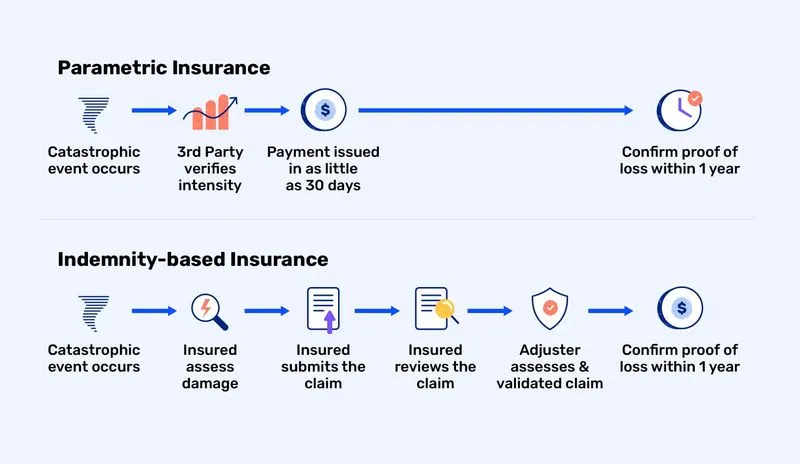
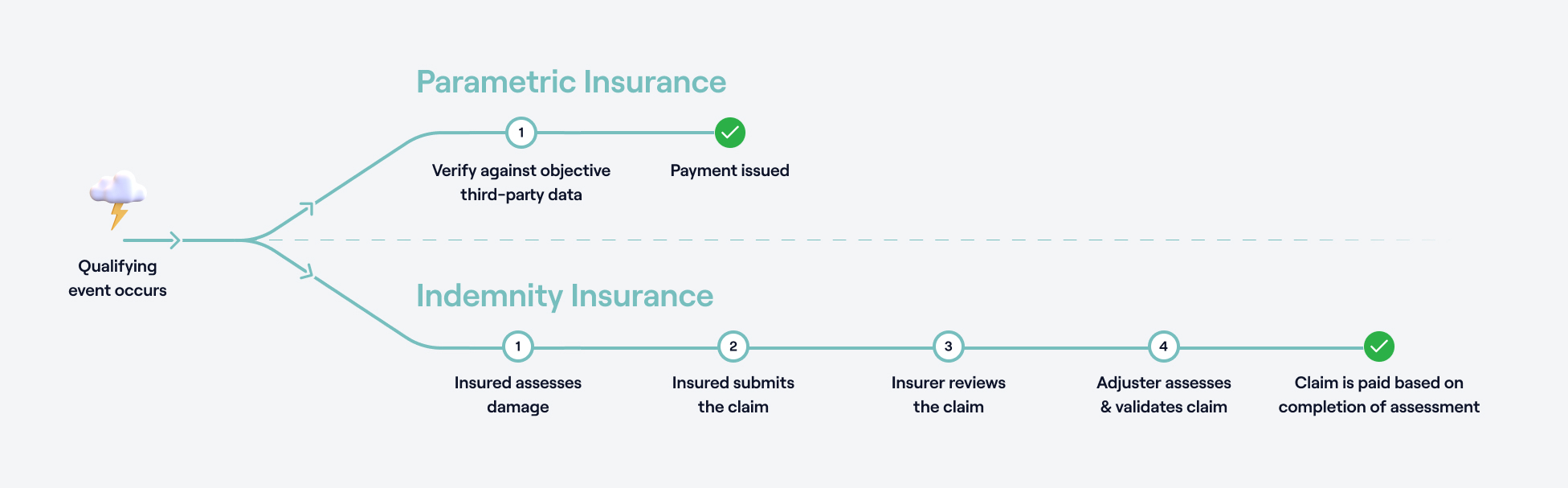
Parametric insurance pays out based on a specific, measurable event rather than an assessment of actual financial loss. Traditional indemnity insurance requires filing claims, proving damage, and waiting for adjusters, a process that is often slow and prone to disputes. Parametric insurance removes this friction by automating payouts through pre-agreed triggers encoded in smart contracts.
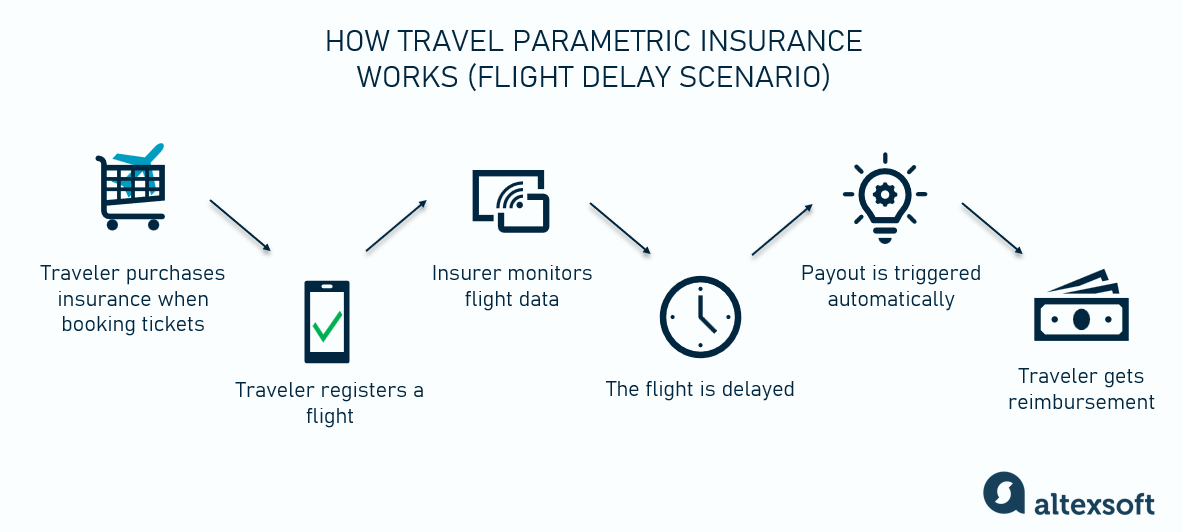
In DeFi, this model leverages blockchain’s transparency. A policy can be coded so that funds release automatically when an oracle confirms a threshold has been met. For example, a yield farmer might hold a policy that pays out if ETH drops below a certain level within 24 hours. There is no need to prove the drop caused a loss; the drop itself is the trigger. This distinction is critical for high-stakes financial decisions where speed and certainty matter. According to Swiss Re, parametric insurance expands coverage beyond physical assets to fill protection gaps left by indemnity insurance, such as deductibles and excluded perils.
How smart contracts automate payouts
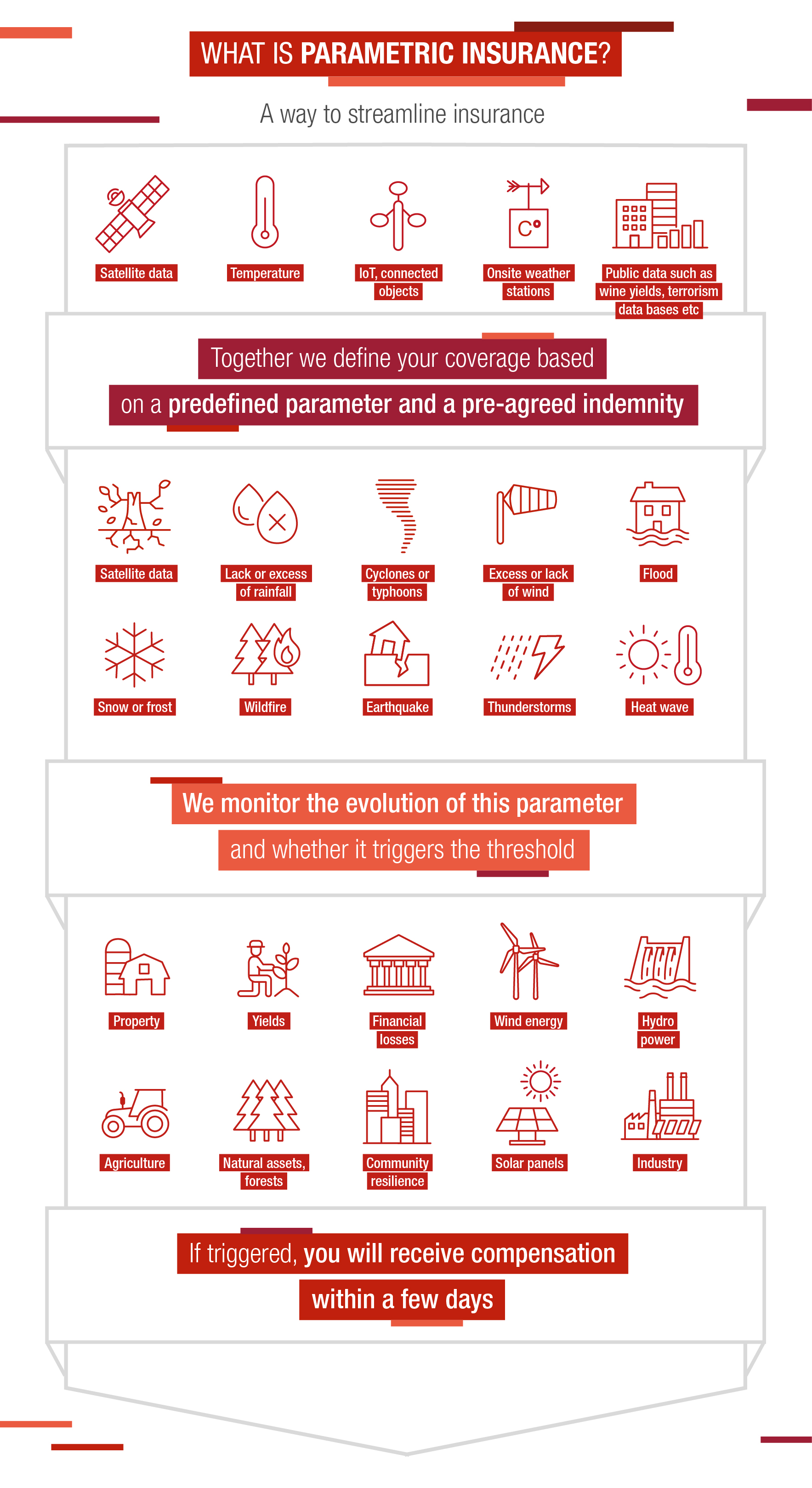
Parametric insurance in DeFi removes the claims adjuster from the equation. The payout triggers automatically when a predefined parameter is met, relying on three core components: the oracle, the smart contract, and the liquidity pool.
Smart contracts cannot access off-chain data directly. Oracles act as bridges, fetching external information like crypto prices or weather readings. For DeFi, oracles typically pull price data from decentralized exchanges. The reliability of the oracle is critical; if the data feed is compromised, the contract executes incorrectly.
Once the oracle delivers data, the smart contract evaluates it against policy terms. If the parameter—such as ETH dropping below $2,000—is met, the condition is satisfied. This check happens on-chain, leaving no room for human interpretation. The contract determines eligibility in seconds, not weeks.
When the trigger condition is satisfied, the smart contract automatically transfers funds from the insurance pool to the policyholder’s wallet. There is no paperwork or bank transfer delay. This immediacy provides liquidity exactly when it is needed most.
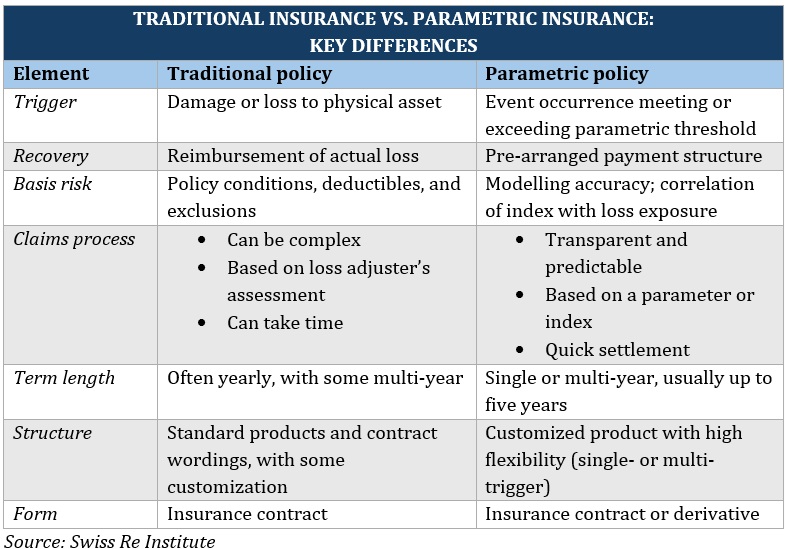
This speed contrasts sharply with traditional indemnity insurance. While traditional policies require loss assessment, DeFi parametric policies rely on data feed integrity. This shift reduces administrative costs but introduces "basis risk"—the potential mismatch between the trigger parameter and the actual financial loss suffered by the user.
Market Context
Understanding the volatility of underlying assets helps contextualize the risk transfer mechanism. The following chart visualizes the correlation between an oracle data feed (e.g., ETH/USD) and a hypothetical smart contract payout trigger.
Where parametric insurance works best
Traditional insurance relies on assessing individual loss after the fact, a process that can take months. In DeFi, where capital can vanish in seconds, that timeline is useless. Parametric insurance shifts the focus from how much was lost to whether a specific event occurred.
Liquidation cascades
When a major asset drops in price, it can trigger a domino effect of liquidations across lending protocols. A parametric policy can be coded to pay out automatically if the price of ETH falls below a certain threshold on a major exchange for a set duration. This provides immediate liquidity to affected protocols, stabilizing the ecosystem before the crash deepens.
Oracle failures
Oracles feed real-world data to smart contracts. If an oracle fails or provides incorrect data, it can lead to massive mispricing. A parametric trigger can activate if the oracle’s data deviates significantly from a consensus of other trusted sources for more than a few blocks. This ensures rapid compensation for users caught in the crossfire of bad data.
Protocol exploits and hacks
Certain types of exploits leave a clear digital fingerprint. If a protocol’s vault is drained by more than a specific percentage within a short window, and the cause is verified as a smart contract vulnerability, the parametric policy pays out. This removes the need for lengthy forensic investigations before capital is returned to users.
Comparing coverage limits
The following table illustrates how parametric coverage differs from traditional insurance in these high-stakes scenarios.
| Risk Scenario | Traditional Insurance | Parametric Insurance |
|---|---|---|
| Liquidation Cascade | Slow claims process; often excludes systemic risk | Instant payout based on asset price drop |
| Oracle Failure | Disputed liability; lengthy legal review | Automatic trigger if data deviates from consensus |
| Protocol Exploit | Requires proof of individual loss; slow payout | Pays out if total vault drain exceeds threshold |
Market liquidity and pricing models
Pricing a parametric policy in DeFi involves modeling the probability of a trigger event against the available liquidity in the smart contract pool. Unlike traditional indemnity insurance, where premiums reflect risk assessment and administrative overhead, parametric premiums are derived from the cost of the underlying data oracle and the depth of the liquidity pool backing the payout.
Think of the liquidity pool as the collateral that guarantees the trigger payout. If the pool is shallow, a single large event can drain the protocol, making future premiums skyrocket. Swiss Re notes that parametric insurance fills protection gaps left by indemnity models by relying on objective triggers, which shifts the pricing focus from loss adjustment to data reliability and capital efficiency [src-serp-1].
To understand current market sentiment, we look at the performance of major DeFi insurance tokens. These assets often correlate with broader crypto volatility, but their specific pricing reflects the risk appetite for specific protocols they cover.
When a new high-risk event emerges, such as a major smart contract exploit, the demand for coverage spikes, driving up the premium for affected protocols. This dynamic pricing ensures that capital is allocated where risk is highest, but it also means premiums can be volatile.
Navigating regulatory compliance
Onchain parametric insurance operates at the intersection of decentralized finance and traditional risk transfer, creating a complex regulatory environment. The International Association of Insurance Supervisors (IAIS) has highlighted the potential of parametric solutions to bridge natural catastrophe protection gaps, yet emphasizes the need for clear operational standards.
Insurance classification and oversight
Regulators are still determining whether onchain parametric products fit into existing insurance frameworks. For an onchain product to be viable, it must demonstrate that its smart contract logic is transparent, auditable, and resistant to manipulation. Without this clarity, providers risk operating in a legal gray area that could deter institutional adoption.
KYC and AML requirements
Even though the underlying blockchain is permissionless, regulatory compliance often requires Know Your Customer (KYC) and Anti-Money Laundering (AML) checks at the entry point. Onchain parametric insurance platforms must integrate identity verification protocols to ensure that participants are not engaged in illicit activities. This creates a tension between the pseudonymous nature of DeFi and the transparency demands of global financial regulations.
Note: Chart illustrates the volatility environment in which onchain parametric products often operate, impacting trigger reliability and capital requirements.
Check if parametric insurance fits your risk profile
Before buying a policy, verify that the contract actually protects you from the specific risks you hold. Parametric insurance is not a substitute for traditional coverage; it is a specialized tool that trades precision for speed. Use this checklist to determine if onchain risk transfer is the right move for your portfolio.
Your payout depends entirely on the data source. Check if the protocol uses decentralized oracles or relies on a single, centralized provider. In DeFi, the oracle is the backbone of the contract; ensure it has a track record of handling high-frequency data without manipulation.
Basis risk is the gap between your actual loss and the policy payout. This happens when the index moves, but your specific asset does not. Calculate the historical correlation between your asset and the trigger. If the correlation is weak, the policy may not protect you when it matters most.
Even if the trigger hits, you need the protocol to have the capital to pay out. Check the insurance pool’s liquidity depth and the contract’s audit history. Look for evidence of past claims being settled successfully. If the pool is underfunded, you might face delays or partial payouts.
Parametric insurance shines in speed, but the payout structure can be rigid. Determine if the payout is a lump sum or tiered, and whether it covers your full exposure. Verify that the contract does not require manual claims submission or KYC verification, which defeats the purpose of onchain efficiency.
If your risk profile involves highly correlated assets and you value speed over perfect precision, parametric insurance may be a strong fit. However, if your losses are idiosyncratic or complex, the basis risk might outweigh the benefits.
No comments yet. Be the first to share your thoughts!