Why parametric insurance fits DeFi
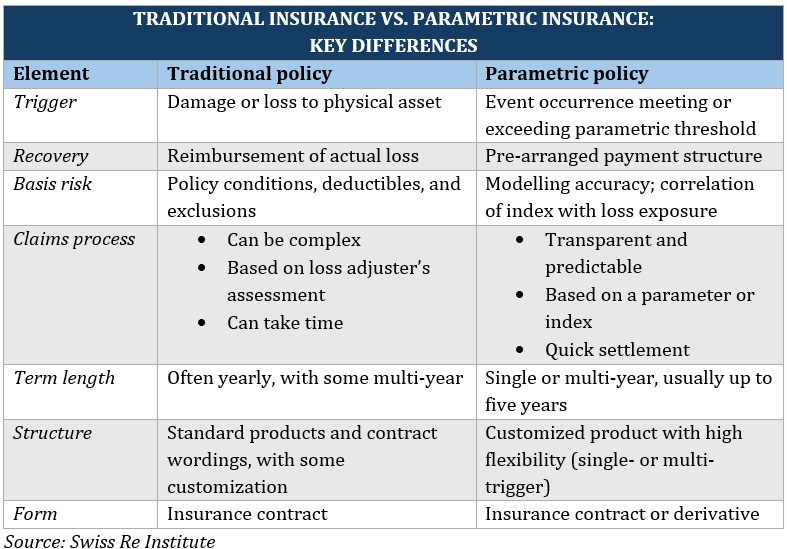
Traditional indemnity insurance relies on proving actual loss after an event occurs. For DeFi protocols, this model is too slow. By the time claims are assessed, liquidity has often drained. Parametric insurance removes the need for loss assessment by tying payouts to objective, pre-defined triggers. If the trigger condition is met, the payout happens automatically, regardless of the actual financial impact on any single user.
This speed is a structural necessity for decentralized finance. In DeFi, a flash loan attack or smart contract exploit can drain millions in seconds. Traditional insurers might take months to investigate, leaving the protocol exposed. Parametric solutions settle claims in minutes or hours, allowing protocols to replenish reserves and restore confidence before the crisis deepens.
The core value proposition lies in this certainty. Smart contracts integrate directly with oracles monitoring on-chain data, such as price feeds. When a specific threshold is breached, the insurance protocol executes the payout without human intervention. This eliminates counterparty risk—the fear that an insurer will dispute a claim—and aligns the insurance mechanism with the automated nature of DeFi.
While parametric insurance does not cover every type of risk, it fills a critical gap where speed and transparency are paramount. It transforms insurance from a reactive legal process into a proactive, programmable risk management tool.
Designing the trigger mechanism
The core of any parametric insurance strategy lies in its trigger mechanism. Unlike traditional indemnity policies that require lengthy claims assessments, parametric contracts payout automatically when a specific, objective parameter is met. This design eliminates ambiguity and reduces administrative overhead. The challenge is selecting data sources and parameters that are both reliable and resistant to manipulation.
Selecting objective data sources
Reliability begins with the oracle. In DeFi, oracles serve as the bridge between off-chain real-world data and on-chain smart contracts. The integrity of your parametric strategy depends entirely on the oracle’s ability to provide accurate, tamper-resistant data. Relying on a single data feed introduces significant risk. Instead, aggregate data from multiple reputable sources to create a consensus-based trigger. This approach mitigates the risk of a single point of failure while maintaining the speed and efficiency that define parametric insurance.
The Swiss Re Institute and other official sources emphasize that parametric insurance offers rapid, flexible payouts based on pre-defined triggers. In the context of DeFi, this translates to using on-chain price data, volatility indices, or external event data feeds that are cryptographically verified. The goal is to create a data source that is as immutable as the blockchain itself, ensuring that the trigger condition is indisputable.

Defining exact payout parameters
Once the data source is established, define the exact parameters that activate a payout. These parameters must be binary and measurable: either the condition is met, or it is not. For example, a DeFi protocol might trigger a payout if the price of ETH drops below a certain threshold within a 24-hour window. The key is to ensure that these thresholds are aligned with the actual risk exposure of the participants.
Consider the hypothetical price action of a major DeFi asset. A well-designed trigger might activate when a sharp decline occurs, providing immediate liquidity to affected users. This is visualized below, where a sudden drop in price would activate the smart contract’s payout mechanism.
The precision of these parameters directly impacts the effectiveness of the strategy. Too loose a definition, and the insurance becomes too expensive; too tight, and it rarely pays out, defeating its purpose. Balancing these factors requires a deep understanding of both the underlying asset’s behavior and the risk tolerance of the DeFi community. By focusing on objective, verifiable data, you create a system that is not only efficient but also trustworthy.
Closing the gap between trigger and loss
Parametric insurance eliminates claims processing delays by paying out automatically when an external index hits a predetermined threshold. In DeFi, this might mean a stablecoin depegs below $0.95 or an oracle reports a specific price drop. While efficient, this model introduces basis risk: the structural gap between the event that triggers a payout and the actual financial loss suffered by the user.
Basis risk arises because the index is rarely a perfect proxy for individual exposure. A protocol might suffer a total loss if its primary collateral is exploited, yet the broader market index it tracks remains stable. Conversely, a market-wide crash might trigger a payout for a protocol that was insulated from the downturn by its specific risk mitigations. In either scenario, the policy fails to align with the user's actual economic reality.
Mitigating this disconnect requires careful index selection. Relying on a single, broad market metric often leaves significant coverage holes. Instead, strategies should incorporate orthogonal indices or composite triggers that better reflect the specific vulnerabilities of the underlying asset or protocol. This approach ensures that payouts occur when the user is truly exposed, rather than just when a correlated external event happens.
Comparing coverage structures
Parametric insurance isn't a one-size-fits-all product. While the core mechanism remains the same—payouts triggered by objective data—the structure of that trigger varies significantly. Choosing the right structure depends on how your DeFi protocol handles volatility and liquidity risk. Some structures offer binary certainty, while others provide graduated protection that mirrors actual market stress.
Binary vs. Sliding Scale vs. Deductible
Traditional insurance pays for proven losses, which creates basis risk in DeFi where oracle data might lag or differ from exchange prices. Parametric models remove this gap by paying out based on the event itself, not the calculated damage. This distinction allows for faster capital deployment but requires a precise understanding of how each structure scales payouts.
The table below breaks down the three most common parametric structures used in DeFi risk management. Understanding the difference between a hard cutoff (binary) and a graduated response (sliding scale) is essential for aligning coverage with your protocol's specific risk appetite.
| Structure | Trigger Logic | Payout Model | Best Use Case |
|---|---|---|---|
| Binary | Event exceeds threshold | Fixed lump sum | Catastrophic event hedging |
| Sliding Scale | Event exceeds threshold | Proportional to severity | Gradual market stress |
| Deductible-based | Event exceeds deductible | Amount above deductible | High-frequency low-severity risk |
Deploy your parametric strategy
Building a parametric insurance position in DeFi requires precision. Unlike traditional indemnity policies that rely on post-loss assessments, parametric contracts pay out automatically when an external trigger—such as a price drop or volatility spike—hits a pre-defined threshold. This eliminates the need for claims processing, but it shifts the burden of accuracy to your setup. You are essentially coding a financial safety net that only tightens when the market moves against you.
Step 1: Select a reliable oracle
Your smart contract is only as trustworthy as the data feeding it. In DeFi, oracles act as the bridge between off-chain reality and on-chain execution. If the oracle is manipulated or fails to update, your payout logic will execute incorrectly. Choose an oracle with a strong track record of data integrity and resistance to manipulation. This is the foundation of your strategy; a weak oracle turns your insurance into a liability.
Step 2: Define clear trigger parameters
Next, determine the exact conditions for a payout. Will the trigger be based on the price of ETH, a volatility index, or the status of a specific lending protocol? These parameters must be objective and measurable. Avoid vague terms. For example, instead of "when the market crashes," use "when ETH drops below $2,000 for three consecutive hours." Clear triggers reduce ambiguity and ensure the smart contract executes without human intervention.
Step 3: Write and audit the smart contract
Code your payout logic into a smart contract. This code should be minimal, transparent, and easy to verify. Once written, it must undergo a rigorous security audit by a reputable firm. In DeFi, a single bug can lead to total loss of funds. Do not skip this step. Treat the audit as non-negotiable, ensuring that your trigger conditions and payout mechanisms are secure against common vulnerabilities like reentrancy attacks.
Step 4: Fund and deploy the contract
Finally, fund the smart contract with the premium or collateral needed to cover potential payouts. Deploy the contract to the mainnet or a testnet for final verification. Once live, your parametric insurance is active. Monitor the oracle and trigger conditions periodically to ensure they remain aligned with your risk management goals. This setup provides automated protection, allowing you to focus on your core strategy while the contract manages the downside risk.
Your smart contract is only as trustworthy as the data feeding it. In DeFi, oracles act as the bridge between off-chain reality and on-chain execution. If the oracle is manipulated or fails to update, your payout logic will execute incorrectly. Choose an oracle with a strong track record of data integrity and resistance to manipulation. This is the foundation of your strategy; a weak oracle turns your insurance into a liability.
Next, determine the exact conditions for a payout. Will the trigger be based on the price of ETH, a volatility index, or the status of a specific lending protocol? These parameters must be objective and measurable. Avoid vague terms. For example, instead of "when the market crashes," use "when ETH drops below $2,000 for three consecutive hours." Clear triggers reduce ambiguity and ensure the smart contract executes without human intervention.

Code your payout logic into a smart contract. This code should be minimal, transparent, and easy to verify. Once written, it must undergo a rigorous security audit by a reputable firm. In DeFi, a single bug can lead to total loss of funds. Do not skip this step. Treat the audit as non-negotiable, ensuring that your trigger conditions and payout mechanisms are secure against common vulnerabilities like reentrancy attacks.

Finally, fund the smart contract with the premium or collateral needed to cover potential payouts. Deploy the contract to the mainnet or a testnet for final verification. Once live, your parametric insurance is active. Monitor the oracle and trigger conditions periodically to ensure they remain aligned with your risk management goals. This setup provides automated protection, allowing you to focus on your core strategy while the contract manages the downside risk.
Common questions about parametric models
What is a parametric insurance model?
Parametric insurance shifts the basis of coverage from physical damage assessment to objective, pre-agreed metrics. Instead of waiting for claims adjusters to evaluate loss, payouts trigger automatically when a specific data point crosses a set threshold. In DeFi, this often means smart contracts releasing stablecoins or tokens when an oracle confirms a price crash or a protocol hack, eliminating the friction and delay of traditional indemnity claims.
What are the downsides of parametric insurance?
The primary risk is basis risk—the possibility that a trigger occurs, but the user suffers no actual loss, or vice versa. For example, a protocol might be hacked, but if the oracle data is delayed or manipulated, the parametric trigger might not fire. This disconnect between the trigger and the actual financial impact can leave users underinsured despite the policy being active. Rigorous oracle design and multiple data sources are essential to mitigate this gap.
What is an example of a parametric insurance policy?
A common example is coverage for "flash loan attacks" or "oracle manipulation." If a DeFi protocol’s TVL drops by more than 50% within a 10-minute window due to a verified exploit, the smart contract automatically pays out claims to affected users. This mirrors traditional parametric policies that pay out when wind speeds exceed a certain mph during a hurricane, regardless of whether a specific roof was damaged.
What does parametric mean in insurance?
In insurance, "parametric" refers to the use of parameters—specific, measurable variables like temperature, rainfall, or price levels—to define coverage. It contrasts with indemnity insurance, which pays based on the actual value of the loss. For DeFi users, this means coverage is defined by code and data, not by human judgment or complex damage assessments, making it faster but strictly bound by the accuracy of the underlying data.
No comments yet. Be the first to share your thoughts!