Defining the parametric insurance strategy
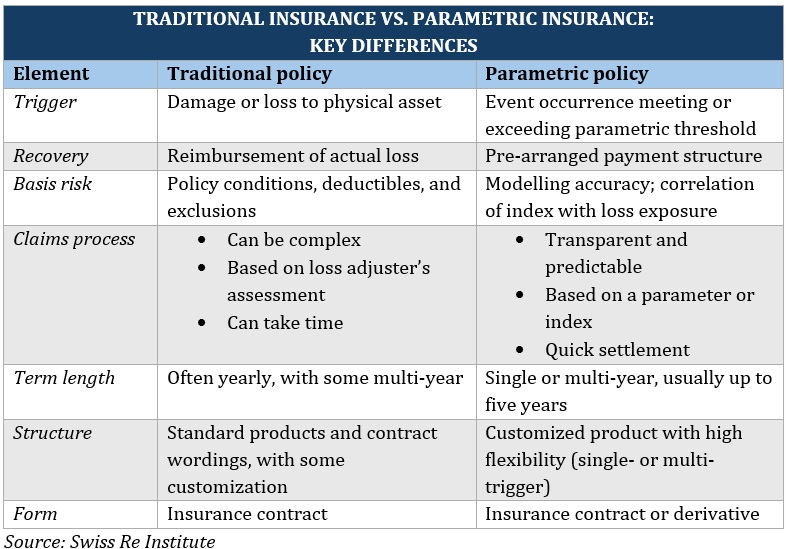
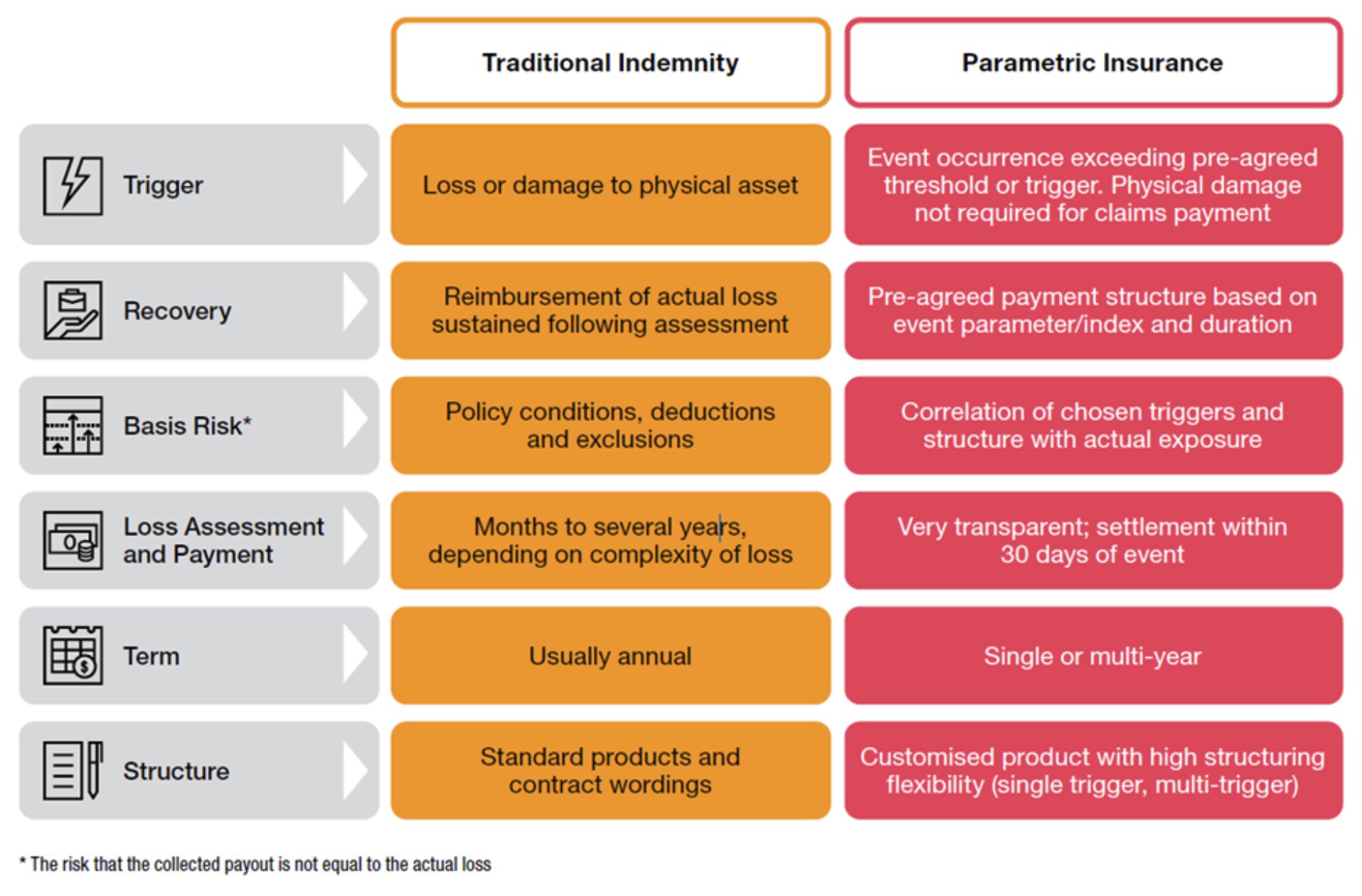
Parametric insurance is a risk transfer mechanism that pays out based on the occurrence of a specific, pre-defined event rather than an assessment of actual financial loss. Unlike traditional indemnity models, which require lengthy claims adjustments to verify damage, parametric solutions rely on objective data triggers. This distinction is critical in decentralized finance, where speed and certainty of settlement can determine the viability of a protocol during volatile market conditions.
Traditional insurance faces high verification costs and moral hazard. Insurers must investigate claims to ensure the loss was real and proportional to the payout. Parametric insurance removes this friction by establishing a transparent index or oracle feed before the policy is written. If the data meets the threshold, the payout is automatic. As noted by Aon, this creates a "simple, straightforward and fast-paying" solution that eliminates the ambiguity of loss assessment Aon.
For DeFi, this model aligns with the trustless nature of blockchain. Smart contracts can monitor on-chain data—such as token prices or liquidity pool ratios—and execute payouts without human intervention. SwissRe describes this as covering the "probability of a loss-causing event" through index-based solutions, making it ideal for protecting against flash crashes or oracle failures where traditional claims processes would be too slow to prevent further damage SwissRe.
The trade-off is basis risk: the possibility that the trigger occurs but the user suffers no actual loss, or vice versa. However, in high-stakes DeFi environments, the certainty of immediate liquidity often outweighs the precision of indemnity. This strategy shifts the focus from repairing damage to restoring capital quickly, allowing protocols to maintain solvency during systemic shocks.
Selecting reliable data oracles
In a DeFi parametric insurance strategy, the oracle is the single point of failure. Unlike traditional insurance, where an adjuster investigates claims, smart contracts execute payouts automatically based on predefined triggers. If the data feeding those triggers is flawed, the contract pays out incorrectly—either draining liquidity or failing to protect policyholders when disaster strikes.
Why data integrity matters
Parametric insurance relies on measurable triggers such as cryptocurrency volatility indices. These events must be translated into on-chain data points that the smart contract can read. This translation process is handled by oracles, which bridge off-chain real-world events with on-chain execution. If an oracle is compromised or experiences latency, the "if-then" logic breaks, rendering the insurance product useless.
Criteria for oracle selection
When selecting an oracle for your DeFi insurance protocol, prioritize decentralization and historical accuracy. A single-source oracle creates a centralization risk that contradicts the trustless nature of DeFi. Look for oracles that aggregate data from multiple independent providers to mitigate manipulation risks. Additionally, verify that the oracle has a proven track record of uptime and data consistency, especially during high-volatility market events.
Monitoring oracle performance
Once your strategy is live, continuous monitoring of oracle feeds is essential. Set up alerts for data discrepancies or latency spikes. Regular audits of the oracle's data sources and aggregation methods help ensure that the triggers remain reliable over time. The security of your parametric insurance product is only as strong as the weakest link in its data supply chain.


As an Amazon Associate, we may earn from qualifying purchases.
Integrating onchain coverage protocols
Integrating onchain coverage protocols into your DeFi strategy shifts risk management from reactive damage control to proactive treasury preservation. By purchasing parametric insurance, you transfer smart contract and liquidity risks to a decentralized pool of capital, ensuring that payouts occur automatically when predefined triggers are met, rather than waiting for lengthy claims assessments.
The landscape includes established players like Nexus Mutual and InsurAce, each offering distinct mechanisms for coverage. Nexus Mutual operates on a peer-to-peer model where members underwrite each other's risks, while InsurAce provides a more traditional insurance-like structure with multiple coverage pools. Choosing the right protocol depends on your specific exposure—whether it is a single smart contract vulnerability or broader liquidity pool impermanence.
When evaluating these options, consider the coverage type, premium structure, and supported chains. The table below compares the key parameters of leading protocols to help you select the best fit for your portfolio.

| Protocol | Coverage Type | Premium Model | Supported Chains |
|---|---|---|---|
| Nexus Mutual | Smart Contract Failure | Staking-based (NXM) | Ethereum, Arbitrum, Optimism |
| InsurAce | Smart Contract & Liquidity | Fixed Premium (USDC/ETH) | Multi-chain (BSC, Ethereum, Polygon) |
| DefiEdge | Smart Contract Hacks | Fixed Premium (DAI/ETH) | Ethereum, Arbitrum |
| Audius | Platform Uptime | Subscription | Ethereum |
Beyond protocol selection, integration requires careful attention to trigger definitions. Parametric insurance relies on external data oracles to verify events. Ensure the protocol you choose uses reputable oracles for smart contract hacks or liquidity pool drains. Misaligned triggers can leave you exposed if the event does not match the precise conditions set in the smart contract.
Finally, factor in the cost of coverage relative to your potential loss. For high-stakes positions, the premium is often negligible compared to the total value at risk. Regularly review your coverage as your portfolio evolves, adding new protocols to your insurance strategy as you deploy capital into new ecosystems.
Structuring trigger parameters
Defining the right trigger parameters is the most critical design decision in a parametric insurance strategy. Unlike traditional insurance, which pays out based on actual loss assessments, parametric contracts rely on objective, pre-defined thresholds. In DeFi, these parameters typically involve price drops, duration of the drop, or trading volume spikes. Getting this balance right determines whether your strategy acts as a robust hedge or an expensive liability that drains capital through false positives.
Price thresholds and volatility buffers
Setting the price drop percentage requires a clear understanding of the asset’s historical volatility. If your trigger is too sensitive, normal market fluctuations will activate payouts unnecessarily, increasing your premium costs without providing real protection against tail risks. Conversely, a threshold that is too wide leaves you exposed during significant but sub-threshold corrections.
To visualize these dynamics, consider the historical volatility of major DeFi assets. A technical chart helps identify natural support levels and average true ranges (ATR), which can inform where to set your price trigger. For example, if an asset typically experiences a 10% weekly swing, a 5% drop trigger might result in frequent, costly payouts during normal market conditions.
Duration and volume filters
Price alone is an insufficient trigger because markets often experience sharp, short-lived spikes that revert quickly. Adding a duration filter ensures that the adverse price action persists long enough to warrant a payout. For instance, requiring the price to remain below a certain threshold for 24 or 48 hours filters out flash crashes and reduces the likelihood of whipsaw events.
Volume data can further refine this structure. A price drop accompanied by low volume may indicate a lack of market conviction, whereas a drop with high volume suggests a broader market shift. Some protocols allow you to combine these metrics, requiring both a price threshold breach and a volume spike. This multi-factor approach creates a more accurate representation of genuine market stress, balancing coverage cost with payout probability.
Balancing cost and coverage
The interplay between trigger sensitivity and premium cost is inverse. Tighter triggers with lower thresholds offer better protection but come with higher premiums due to the increased probability of payout. Looser triggers reduce costs but leave gaps in coverage. Your goal is to find the "sweet spot" where the cost of the premium is justified by the severity of the risk you are hedging against.
This requires backtesting your proposed parameters against historical market data. By simulating past events, you can estimate how often your trigger would have activated and what the total cost would have been. This data-driven approach helps you avoid overpaying for coverage that rarely pays out while ensuring you are protected during genuine market crises.
Managing basis risk and coverage gaps
Parametric insurance solves the slow claims process, but it introduces a different problem: basis risk. This is the mismatch between the trigger event and the actual financial loss. In traditional insurance, the payout is based on the verified damage. In parametric models, it is based on a predefined data point, such as an earthquake magnitude or a price index drop. When these two diverge, the policyholder faces a gap.
Consider a DeFi liquidity provider. The parametric trigger might be a 20% drop in ETH price. If ETH drops 25%, the insurance pays out. However, if the provider’s loss was actually driven by a smart contract exploit or a specific pool imbalance rather than the market price itself, the insurance does not cover it. The trigger fired (or didn't), but the specific risk materialized differently. This is the essence of basis risk: the correlation between the index and the actual exposure is imperfect.
To mitigate this, strategies must layer coverage rather than relying on a single parametric product. Combining parametric triggers with traditional indemnity policies or decentralized protection protocols can fill the gaps. For instance, a protocol might use a parametric hedge for market volatility while retaining a separate coverage layer for technical failures. This hybrid approach acknowledges that no single metric can perfectly capture every vector of loss in the complex DeFi ecosystem.
Transparency in the trigger mechanism is also critical. Users must understand exactly what data feeds are used and how they are sourced. Relying on a single, centralized oracle for a critical trigger introduces its own basis risk if that oracle is manipulated or fails. Diversifying data sources and understanding the limitations of the chosen index are essential steps in building a robust parametric insurance strategy.
Parametric insurance strategy checklist
Before deploying capital into a DeFi protocol, treat your risk transfer setup like a structural audit. A parametric insurance strategy relies on pre-defined triggers rather than subjective loss assessments, meaning the code must be flawless and the data sources must be trustworthy. Use this checklist to ensure your coverage actually protects your position against the specific risks you face.
Select an objective, verifiable metric that correlates with your loss. In DeFi, this is often a price threshold on a specific oracle or a volume drop on a DEX. Avoid vague conditions like "market crash" in favor of precise data points, such as "ETH price below $1,800 for 10 minutes." The trigger must be indisputable to prevent disputes during a payout event.
Parametric payouts depend entirely on the data source. If the oracle is manipulated or experiences downtime, your strategy fails regardless of the smart contract's quality. Prefer decentralized oracle networks with multiple data feeds over single-source providers. Ensure the oracle has a track record of resisting flash loan attacks and maintaining uptime during high-volatility events.

Basis risk occurs when the trigger index moves but your actual portfolio does not suffer a corresponding loss, or vice versa. Backtest your strategy against historical data to identify mismatches. For example, if you hedge against a specific L2's token price, ensure that token's performance is tightly correlated with the liquidity pools you provide to. If the correlation is weak, the hedge may cost you premiums without providing protection.
Have the insurance protocol's smart contracts audited by reputable firms. Look for specific checks on the payout logic: does the contract correctly interpret the oracle data? Are there limits on the maximum payout to prevent insolvency? Ensure the contract includes a clear governance mechanism for updating triggers if the underlying market structure changes, without introducing centralization risks.
A payout is useless if you cannot withdraw the funds when needed. Verify that the insurance protocol has sufficient liquidity in its reserve pool to cover claims during a market crash. Check if there are withdrawal locks or delays that could prevent you from accessing your capital during a crisis. The best parametric insurance strategy is one that provides immediate, liquid relief when your position is under stress.
A parametric insurance strategy is only as strong as its weakest data link. By rigorously testing triggers, oracles, and contract logic, you transform insurance from a passive cost into an active risk management tool. This approach ensures that when the market moves, your protection moves with it, automatically and without friction.
Frequently asked: what to check next
Can you give me an example of parametric insurance?
Parametric insurance pays out based on a specific trigger rather than an actual loss assessment. For example, a DeFi liquidity provider could buy coverage that automatically releases stablecoins if the price of ETH drops below $2,000 on a major exchange. This mirrors traditional applications, such as a farmer receiving a payout when rainfall data falls below a set millimeter threshold, bypassing the need to prove individual crop damage.
What are the downsides of parametric insurance?
The primary limitation is basis risk: the trigger may not perfectly match the user’s actual financial loss. If the index moves but the specific protocol the user is engaged in remains stable, the payout occurs even though no harm was done, or vice versa. Additionally, these policies can be harder to underwrite for complex, multi-variable risks, requiring precise data feeds that must be trusted to be accurate and untampered.
How does parametric insurance work?
The process relies on a pre-defined smart contract and an oracle. The contract specifies the exact conditions for a payout, such as a token price or volatility index value. When an oracle confirms the trigger event has occurred, the smart contract executes the payment automatically. This removes the claims adjustment phase, ensuring that funds are transferred in minutes rather than weeks or months.
No comments yet. Be the first to share your thoughts!