What is parametric insurance?
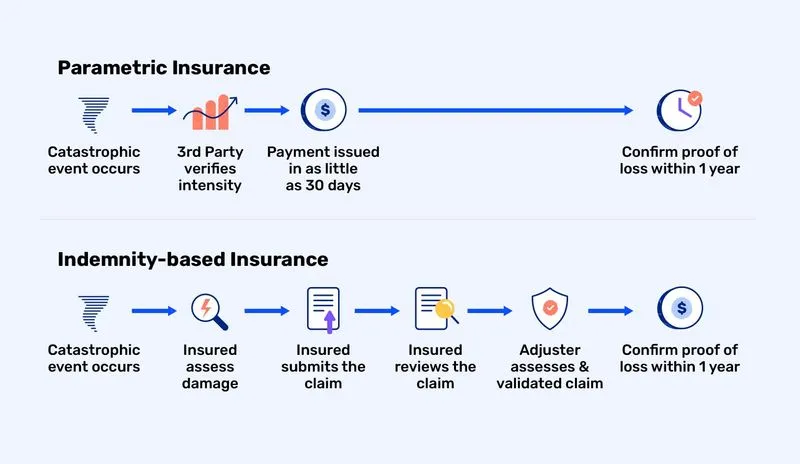
Parametric insurance is a policy where payouts are triggered by a predefined index or threshold, not by a traditional loss assessment. Instead of waiting for an adjuster to verify damage, the contract pays out automatically when a specific metric hits a set number. This index could be wind speed, earthquake magnitude, rainfall levels, or temperature drops.
This approach shifts the focus from "how much damage occurred" to "how severe was the event." For example, if a wind farm experiences wind speeds below a certain threshold, the policy pays out based on the energy shortfall, not an inspection of damaged turbines. This removes the ambiguity of claims processing and accelerates liquidity when it is needed most.
In the context of DeFi, this mechanism translates directly. Smart contracts can monitor onchain oracles for specific price drops or liquidity ratios. When the oracle data confirms the trigger condition, the payout executes instantly. This eliminates the latency of traditional underwriting, making parametric models ideal for fast-moving digital assets and real-time risk transfer.
Parametric insurance choices that change the plan
Parametric insurance replaces traditional loss adjustment with predefined triggers. While this structure accelerates payouts and reduces administrative overhead, it introduces specific risks that DeFi protocols and corporate treasuries must weigh carefully. Understanding these tradeoffs is essential before integrating onchain risk transfer mechanisms into your strategy.
Basis Risk Exposure
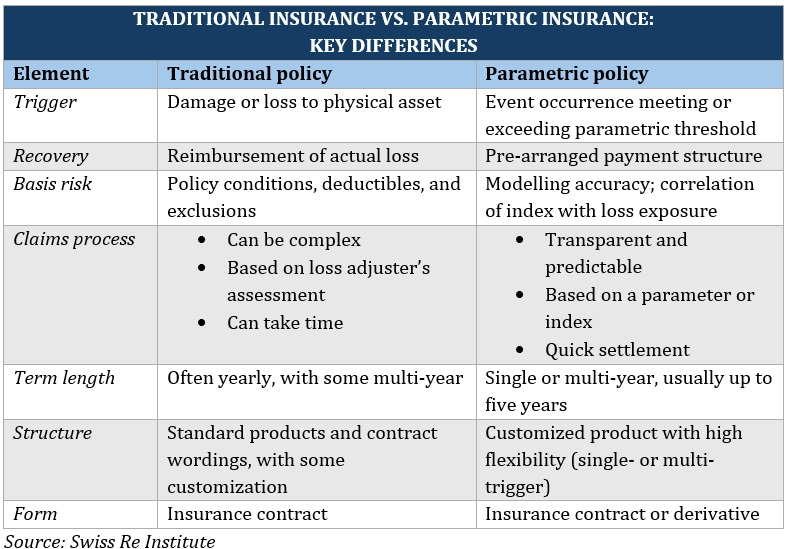
The primary drawback of parametric coverage is basis risk—the mismatch between the index trigger and your actual financial loss. If the external data source indicates a loss event but your specific asset remains unaffected, the policy pays out anyway. Conversely, if your assets suffer damage but the trigger threshold isn't met, you receive nothing. This divergence is inherent to index-based models and requires careful selection of oracles and data sources to minimize.
Coverage Gaps and Thresholds
Traditional insurance often covers partial losses, but parametric policies typically operate on binary or stepped thresholds. A policy might pay 100% if a hurricane exceeds category 4, but zero if it hits category 3, even if the category 3 storm causes significant damage. This "all-or-nothing" structure means you must precisely calibrate triggers to your risk appetite. Over-insuring with low thresholds increases premium costs, while under-insuring leaves you exposed to plausible but non-triggering events.
Oracle and Smart Contract Dependency
Unlike traditional policies settled by adjusters, parametric insurance relies on automated execution via smart contracts and external data oracles. This introduces technical risk: if the oracle fails, is delayed, or reports incorrect data, the payout may be denied or executed incorrectly. Also, smart contract vulnerabilities could potentially be exploited to manipulate trigger conditions. Ensuring the robustness of the data feed and the contract code is as critical as underwriting the risk itself.
| Factor | Advantage | Disadvantage |
|---|---|---|
| Basis Risk | Eliminates subjective loss assessment | Payout may not match actual loss |
| Speed | Near-instant automated payouts | None; speed is a core benefit |
| Transparency | Publicly verifiable onchain data | Relies on oracle accuracy and integrity |
| Cost | Lower administrative and legal fees | Higher premiums for high-trigger thresholds |
Choose the next step
Parametric Insurance works best as a clear sequence: define the constraint, compare the realistic options, test the tradeoff, and choose the path with the fewest hidden costs. That order keeps the advice usable instead of decorative. After each step, pause long enough to check whether the recommendation still fits the reader's actual situation. If it depends on perfect timing, unusual access, or a best-case budget, include a simpler fallback.
Spotting Weak Parametric Insurance Options
Parametric insurance promises speed, but the underlying mechanics often hide significant risk. When relying on AI oracles and onchain infrastructure, the definition of "coverage" shifts from indemnity to data validation. This section identifies the specific structural weaknesses that can leave DeFi protocols and traditional risk managers exposed.
The Oracle Blind Spot
Parametric policies pay out based on external data feeds, not actual loss verification. If the oracle feed is manipulated or experiences latency, the payout triggers incorrectly. This is not a theoretical edge case; it is the primary failure mode for index-based solutions. A delay in wind speed data, for example, can miss the exact threshold needed to trigger a wind energy producer's policy, leaving them uncovered during the most critical moment.
Index Mismatch Risks
A common mistake is selecting an index that correlates loosely with the actual asset. Swiss Re notes that parametric solutions cover the probability of an event, but correlation is not causation. If your protocol’s risk is tied to a specific regional earthquake index, but the oracle uses a broader seismic activity metric, you may face basis risk. The index moves, the policy pays, but the actual loss remains uncompensated because the data points do not align precisely with your exposure.
Data Granularity Gaps
Many off-the-shelf parametric products use aggregated data that lacks the granularity required for DeFi risk transfer. A global temperature average is useless for a solar farm in a specific microclimate. Similarly, a broad market volatility index may not reflect the specific slippage risks of a niche lending pool. Always verify that the data source matches the spatial and temporal resolution of your actual risk. If the data is too coarse, the policy is effectively a bet on the index, not insurance against the loss.
Parametric insurance: what to check next
Parametric insurance shifts the focus from assessing actual losses to measuring specific, objective triggers. This distinction changes how policies are structured and how payouts are executed in DeFi and traditional markets.
What does parametric mean in insurance?
Parametric refers to index-based coverage where payouts are triggered by the intensity of an event rather than the severity of the loss. For example, if wind speeds exceed a pre-agreed threshold, the policy pays out automatically. This removes the need for lengthy claims assessments, providing speed that traditional indemnity insurance cannot match.
What is an example of a parametric insurance policy?
Wind energy producers often use parametric policies to hedge against weather variability. If wind speeds drop below a specific threshold for a set period, the policy triggers a pre-agreed payout. This compensates for the production shortfall caused by low wind, stabilizing revenue without requiring an adjuster to visit the site.
How does parametric insurance differ from traditional insurance?
Traditional insurance relies on indemnity, meaning you are compensated for the actual financial loss suffered. Parametric insurance pays out based on whether an external index—such as earthquake magnitude or rainfall levels—reaches a defined level. The payout is fixed at the start of the contract, removing ambiguity about the final settlement amount.
What are the main advantages of parametric coverage?
The primary advantage is speed. Because payouts depend on verified data oracles rather than physical damage inspections, funds can arrive in days or even hours. This rapid liquidity is critical for DeFi protocols or businesses that need immediate capital to maintain operations after a shock event.
No comments yet. Be the first to share your thoughts!