Why parametric insurance matters for DeFi
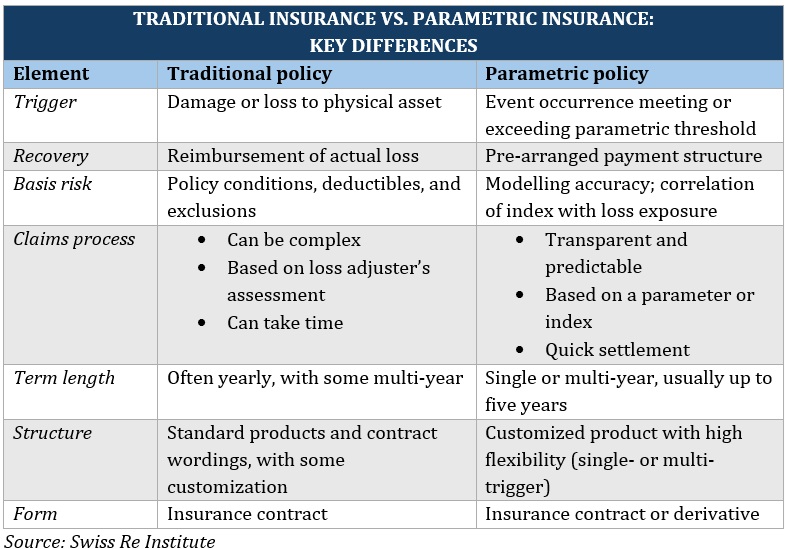
Traditional indemnity insurance relies on assessing actual loss after the fact. In DeFi, that process is too slow. Smart contracts execute in seconds; a rug pull or oracle failure can drain a protocol in minutes. Waiting weeks for an adjuster to verify damages is not a viable risk transfer strategy. Parametric insurance changes the payout mechanic. It pays out based on pre-defined triggers, not on subjective loss assessment.
This structure offers speed and certainty. As noted by the Wharton School, the primary benefit is faster payout, which provides immediate liquidity when it is needed most. For a DeFi treasury, that speed is the difference between solvent recovery and total collapse. The payout is automatic once the trigger event occurs, removing the opacity and delay of traditional claims.
The mechanism is simple. A policy might trigger if the price of ETH drops below a specific threshold on a major exchange, or if a specific smart contract code is verified to be compromised. This is not about estimating how much money was lost; it is about confirming that the bad event happened. The World Economic Forum highlights that this model bolsters transparency by relying on objective data points. There is no room for dispute over the value of the loss, only the occurrence of the event.
This approach creates a reliable safety net for high-stakes crypto environments. It allows protocols to hedge against specific, quantifiable risks without getting bogged down in legal bureaucracy. The trade-off is basis risk—the payout might not perfectly match the actual loss—but for many DeFi actors, the certainty of immediate capital is worth that imperfection.
Designing the trigger mechanism
Effective trigger design requires separating must-have criteria from nice-to-have features. Start with your protocol's actual constraints, then compare options against those criteria. A practical choice should survive normal use, maintenance, timing, and budget. If a recommendation only works in an ideal situation, call that out plainly and give the reader a fallback path.
Funding the Policy and Managing Capital
Building a parametric insurance strategy in DeFi requires shifting how you view liquidity. Instead of treating premiums as a sunk cost or capital as permanently locked away, treat the collateral as an active asset. This approach allows your capital to remain efficient while still providing a safety net against specific risks.
The core mechanic is straightforward: you deposit collateral—often stablecoins or blue-chip crypto assets—into a smart contract that holds the risk. When a predefined trigger occurs, such as a drop in a specific index, the contract automatically releases funds. Because the payout is algorithmic, there is no claims adjustment process that ties up money for months. This rapid liquidity is essential for enterprises and DeFi protocols that need immediate capital to recover from a shock, as noted by the UNDP in their analysis of financial resilience.
However, this efficiency comes with a trade-off known as basis risk. Basis risk occurs when the parametric trigger does not perfectly match your actual financial loss. For example, if your DeFi protocol loses funds due to a hack, but the insurance policy is triggered only by a drop in the underlying asset's price, you might be left uncovered despite having paid premiums. To mitigate this, your strategy must carefully select triggers that correlate tightly with your specific exposure profile.
When comparing traditional insurance to parametric models, the difference in capital efficiency is stark. Traditional carriers hold large reserves to cover uncertain future claims, which drags down returns. Parametric models use on-chain collateral that can be deployed elsewhere when not at risk.
| Feature | Traditional Insurance | Parametric (DeFi) |
|---|---|---|
| Payout Speed | Months (Claims Process) | Minutes (Automated) |
| Capital Efficiency | Low (Locked Reserves) | High (Active Collateral) |
| Basis Risk | Low (Indemnity-Based) | High (Trigger-Based) |
| Transparency | Low (Opaque Reserves) | High (On-Chain Verified) |
| Cost Structure | High (Overhead & Commissions) | Lower (Smart Contract Only) |
To manage this risk, many strategies use a combination of parametric coverage for specific, measurable events and traditional insurance for broader, hard-to-quantify perils. This hybrid approach ensures that your capital is not only efficient but also comprehensive in its protection. The key is to align the parametric triggers with the most frequent and liquid risks in your portfolio, leaving the tail risks to other forms of coverage.
Embed parametric insurance into your protocol
Integrating parametric insurance into a DeFi protocol requires shifting from traditional indemnity models to automated, data-driven triggers. Unlike conventional insurance, which relies on claims adjusters and subjective loss assessments, parametric insurance pays out based on objective, pre-defined events. This distinction is critical for smart contract developers aiming to reduce counterparty risk and automate treasury protection.
Aon describes parametric insurance as a "simple, straightforward and fast-paying risk transfer solution that is triggered by a specific, pre-defined event" [src-serp-8]. For DeFi protocols, this means replacing slow, manual payouts with instant liquidity when specific on-chain or off-chain data points are met. The goal is to create a system where the insurance mechanism is invisible to the user but robust enough to stabilize the protocol during volatility or external shocks.
Step 1: Define the trigger event
The foundation of any parametric strategy is a clear, unambiguous trigger. In DeFi, this is typically a price threshold, a volume spike, or an oracle update. For example, if your protocol holds a significant amount of ETH, you might define a trigger based on the ETH/USD price dropping below a specific level over a 24-hour window.
The trigger must be objective and verifiable. Avoid subjective metrics like "market sentiment" or "regulatory news." Instead, use concrete data points from reputable oracles like Chainlink. The trigger should be binary: either the condition is met, or it is not. This eliminates ambiguity and reduces the potential for disputes.
Step 2: Select a reliable data source
Once the trigger is defined, you need a trusted source to feed the data into your smart contract. Oracle reliability is paramount; a compromised or inaccurate oracle can lead to false payouts or missed coverage. Choose an oracle provider with a strong track record of security and decentralization.
Consider the latency and frequency of data updates. If your protocol operates in a high-frequency trading environment, you may need real-time data feeds. For slower-moving risks, such as quarterly revenue protection, daily updates may suffice. Ensure the data source is compatible with your protocol's architecture and can be integrated seamlessly into your existing smart contract infrastructure.
Step 3: Automate the payout mechanism
With the trigger and data source in place, the next step is to automate the payout. This involves writing smart contract logic that checks the oracle data against the trigger condition. If the condition is met, the contract should automatically release funds to the designated treasury or user accounts.
This automation reduces the need for manual intervention and ensures that payouts are made quickly and fairly. It also enhances transparency, as all parties can verify the trigger condition and the resulting payout on the blockchain. Consider using multi-signature wallets or time-locks for additional security, especially for large payouts.
Step 4: Integrate with treasury management
The final step is to integrate the parametric insurance mechanism into your protocol's treasury management system. This involves setting up the necessary funding streams to pay premiums and managing the reserves that will be used for payouts.
Work with financial professionals to determine the appropriate coverage levels and premium structures. Consider the cost-benefit analysis of different parametric insurance products, weighing the cost of premiums against the potential financial impact of uncovered risks. Regularly review and adjust the strategy as market conditions and protocol risks evolve.

Identify a binary, objective event (e.g., price threshold) that will trigger coverage. Ensure it is verifiable and unambiguous to prevent disputes.
Choose a trusted oracle or API provider with a strong security track record. Verify compatibility with your protocol's architecture and data latency requirements.

Write smart contract logic to check oracle data against the trigger. Ensure automatic release of funds to treasury or users when conditions are met.

Set up funding streams for premiums and manage payout reserves. Collaborate with financial experts to optimize coverage levels and premium structures.
By following these steps, protocol developers can effectively embed parametric insurance into their DeFi strategies, providing robust risk transfer and enhancing user trust through transparent, automated protection.
Common pitfalls in parametric design
Building a parametric insurance strategy for DeFi risk transfer requires more than just setting a trigger; it demands rigorous stress-testing of the underlying data. Two structural flaws frequently undermine these strategies: basis risk and oracle manipulation. Ignoring either can turn a hedging mechanism into a liability.
Basis risk and coverage gaps
Basis risk occurs when the index trigger activates, but your specific portfolio suffers little to no actual loss. In traditional insurance, payouts are based on indemnity (actual damage). In parametric models, they are based on a proxy metric. If the proxy diverges from your reality, the hedge fails.
For example, a DeFi protocol might hedge against a 20% drop in ETH/USD, but if the protocol’s exposure is primarily to stablecoin de-pegging or smart contract exploits, the parametric trigger does nothing. As the UNDP notes in their analysis of parametric resilience, these products offer rapid liquidity but are limited by their narrow scope. They cover one specific peril, leaving policyholders exposed to other vectors of loss.
Oracle manipulation risks
DeFi parametric contracts rely entirely on oracles to report external data. If an oracle is compromised or manipulated, the trigger fires incorrectly. This is not theoretical; oracle manipulation has been a primary attack vector in DeFi exploits.
A malicious actor could artificially spike a price feed to trigger a payout, draining the insurance pool. To mitigate this, strategies must use decentralized oracle networks with multiple data sources and time-weighted averages (TWAs) rather than spot prices. Never rely on a single data feed for critical trigger events.
Narrow peril coverage
Parametric insurance is not a blanket solution. It is designed for specific, measurable events. Relying on it for broad market volatility or complex, multi-factor risks often leads to underinsurance. A robust DeFi risk transfer strategy typically combines parametric hedges for specific, high-severity events with traditional capital reserves for general market risk.
Addressing basis risk and oracle reliability
How do I minimize basis risk in my DeFi protocol?
Minimizing basis risk requires aligning the parametric trigger closely with your protocol's actual exposure. If your protocol holds ETH, a price drop trigger is appropriate. If your risk is a smart contract exploit, consider using an oracle that reports on verified contract failures or audit statuses. The UNDP highlights that these products are limited by their narrow scope, so you must layer them with traditional insurance to cover all potential exposures [2]. Always model the correlation between your index and your actual portfolio to ensure the hedge works when you need it most.
Why are oracles critical for parametric insurance?
Oracles are the bridge between on-chain smart contracts and off-chain data. In parametric insurance, the oracle determines whether the trigger event has occurred. If an oracle is compromised, the insurance mechanism fails. Aon describes parametric insurance as a "simple, straightforward and fast-paying risk transfer solution" [src-serp-8], but this simplicity relies entirely on data integrity. Use decentralized oracle networks with multiple data sources and time-weighted averages (TWAs) to mitigate manipulation risks.
Can parametric insurance replace traditional coverage entirely?
No. Parametric insurance is best suited for specific, measurable perils like price drops or weather events. It is not designed for broad market volatility or complex, multi-factor risks. As the World Economic Forum notes, this structure offers rapid liquidity but does not replace the comprehensive protection of traditional indemnity models [1]. A robust strategy combines parametric hedges for high-severity, quantifiable events with traditional reserves for general market risk.
No comments yet. Be the first to share your thoughts!